University
CastleErlangen
Markgräfliches Castle
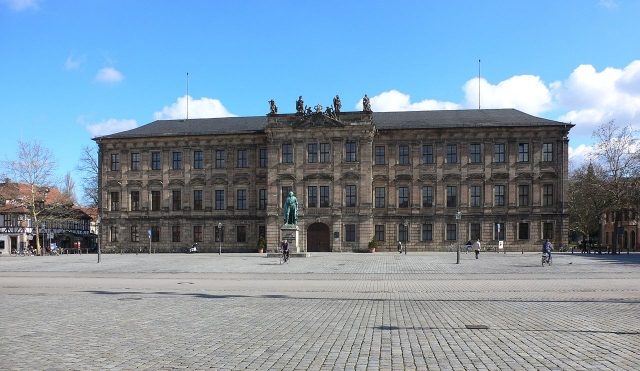
The Margravial Palace in Erlangen, together with its garden, orangery, and Concordienkirche, represents Franconia's first newly conceived Baroque ensemble. Built from 1700 onwards, it shapes Erlangen's cityscape.
History+
Construction of the palace began in 1700, commissioned by Hereditary Prince Georg Wilhelm and supervised by architect Antonio della Porta. Following his death in 1702, Gottfried von Gedeler continued the work, completing the palace in 1704. As early as 1703, Margrave Christian Ernst acquired the unfinished structure to dedicate it to his third wife, Elisabeth Sophie, leading to its alternative name, “Elisabethenburg.” Behind the palace, a garden was created, featuring an orangery (completed 1706), the Concordienkirche (also 1706), a Huguenot fountain, and an equestrian statue. After a period as a princely residence, the palace served as a widow's seat until the early 19th century. In the 18th century, several fires occurred due to chimney issues.
Source: Wikipedia · Licence: CC BY-SA 4.0
This description draws on the facts documented in the linked Wikipedia article; Wikipedia content is licensed under CC BY-SA 4.0. Wording and editing: Mobile History.
Location: 49.5979, 11.0046