ResidenceSulzbach-Rosenberg

Fronveste Castle
Fronveste Castle

Restaurant

The Historic Building: A Journey Through Time+
From Medieval Origins to Modern Landmark+

The history of the building, now known as the "Alte Münze" (Old Mint), stretches back to the Middle Ages. Its foundations likely date to the 13th century, when it served as a fortified tower within the city walls. Over the centuries, it underwent numerous transformations, reflecting the changing needs and architectural styles of each era.

The Gothic Period: A Tower of Strength

During the Gothic period, the building was expanded and reinforced, serving as a crucial defensive point for the city. Its thick stone walls and narrow windows bear witness to its original military purpose. Archaeological findings suggest that it also housed a small garrison.

The Renaissance: A Shift to Administration

With the decline of its military importance, the building was repurposed in the Renaissance. It became an administrative center, housing various city officials and their offices. This period saw the addition of larger windows and more decorative elements, softening its previously austere appearance.

The Baroque Era: Grandeur and Transformation

The Baroque era brought significant changes. The building was extensively renovated and expanded, transforming it into a more stately residence. Ornate stucco work, frescoes, and grand staircases were added, reflecting the opulence of the time. It was during this period that it acquired some of the architectural features still visible today.

The "Alte Münze": A Center of Coinage+

In the 18th century, the building took on its most famous role: the city's mint. For over a century, it was the heart of coin production, playing a vital role in the regional economy. The clatter of hammers and the glow of furnaces would have filled its halls as skilled craftsmen produced currency for the surrounding territories.

The Minting Process: From Metal to Coin

The minting process was complex and labor-intensive. Raw metal, typically silver or copper, was melted down, cast into blanks, and then struck with dies to create coins. Each step required precision and expertise, from the assaying of the metal to the final inspection of the finished coins.

Economic Significance: A Hub of Trade

As a mint, the building was not only a place of production but also a hub of trade and finance. Merchants, bankers, and traders would have frequented its doors, exchanging goods and services, and ensuring the smooth flow of commerce throughout the region.

From Mint to Museum: Preserving History+

In the late 19th century, with the centralization of coinage, the mint ceased operations. The building then served various purposes, including a courthouse and a municipal archive, before eventually being designated as a historical monument.

Restoration and Preservation: A New Chapter

Extensive restoration efforts in the 20th century brought the building back to its former glory. Careful attention was paid to preserving its historical integrity while adapting it for modern use. Today, it stands as a testament to centuries of architectural and cultural heritage.

The Museum: A Window to the Past

The "Alte Münze" now houses a museum, offering visitors a fascinating glimpse into its rich history. Exhibits showcase artifacts from its time as a mint, as well as archaeological finds from its earlier periods. Interactive displays and guided tours bring the past to life, allowing visitors to experience the building's journey through time.

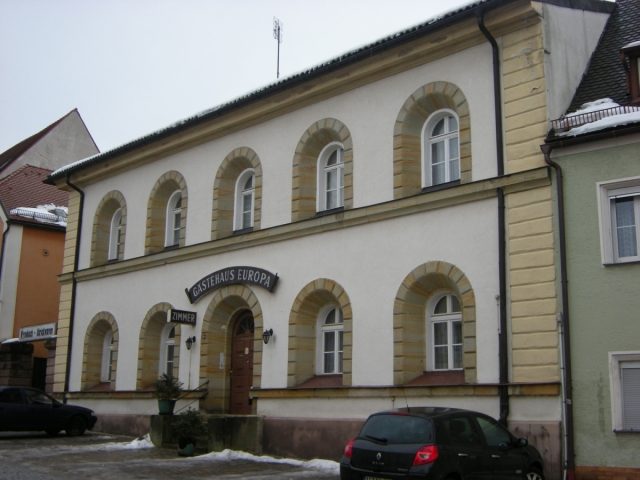
The new Fronveste was built around 1835

Take Mobile History with you

You are reading this text for free. Premium adds what matters on the road: descriptions read aloud, sites found through your camera, whole regions taken offline.

  • Every description, including the ~17,700 Premium sites
  • Audio guide: have descriptions read to you on location
  • AR finder: see sites through your camera, with distance and bearing
  • Unlimited saved sites

14 days free, then from €2.99 a month. Cancel anytime.

Source: Wikipedia · Licence: CC BY-SA 4.0 · Image: http://schloesserrundschau.de/bayern/schloesser01/sulzbach02.html

This description draws on the facts documented in the linked Wikipedia article; Wikipedia content is licensed under CC BY-SA 4.0. Wording and editing: Mobile History.

Location: 49.5057, 11.7407