School
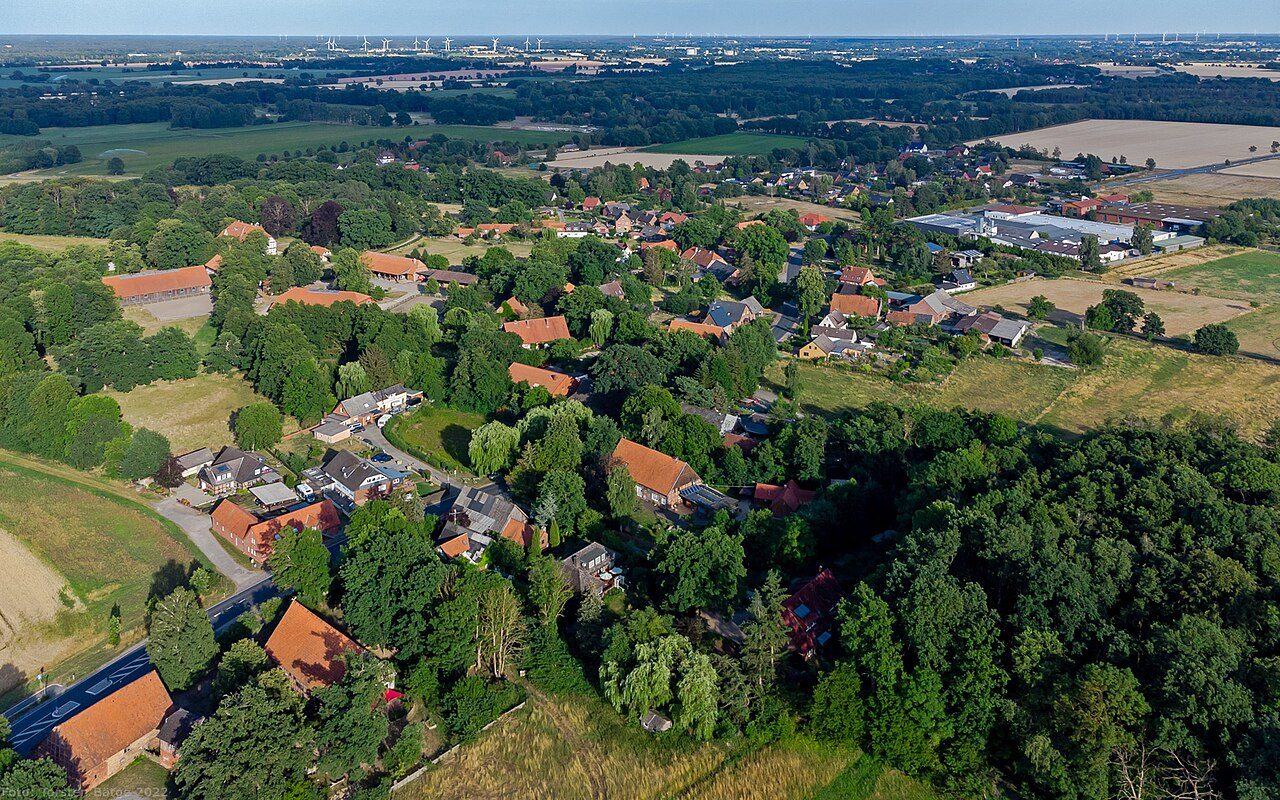
Obergut Grabow Manor

The Obergut in Grabow: A Historic Building with a Rich Past+
The Obergut in Grabow dates back to an old moated castle.
From Moated Castle to Manor House: A Journey Through Time+
The history of the Obergut in Grabow is a fascinating journey through various architectural styles and eras. Originally a moated castle, it served as a defensive structure and residence for local nobility. Over the centuries, the building underwent numerous transformations, reflecting the changing needs and tastes of its inhabitants.
The Moated Castle: Origins and Early History
The exact date of the castle's construction is unknown, but historical records suggest its existence as early as the 13th century. As a moated castle, it was strategically located and surrounded by water, providing natural protection against invaders. The early inhabitants were likely local lords or knights who controlled the surrounding lands.
Transformation into a Manor House: The Renaissance and Baroque Periods
During the Renaissance and Baroque periods, the castle lost its purely defensive function and was gradually transformed into a representative manor house. New wings were added, facades were redesigned, and interiors were decorated with elaborate stucco work and frescoes. The building became a symbol of wealth and status, reflecting the prosperity of its owners.
The Obergut Today: A Cultural Monument
Today, the Obergut in Grabow stands as a testament to its rich history. Although it has undergone further changes and renovations over the centuries, it still retains much of its original charm and architectural significance. It is recognized as a cultural monument and serves as a reminder of the region's past.
Architectural Features and Significance+
The Obergut in Grabow exhibits a blend of architectural styles, reflecting its long and varied history. Elements of medieval castle architecture can still be found, alongside Renaissance and Baroque additions. This unique combination makes it a valuable example of historical building preservation.
Medieval Remnants: Walls and Foundations
Despite numerous alterations, parts of the original medieval moated castle are still visible. These include sections of the thick foundation walls and possibly remnants of the former moat. These elements provide insights into the castle's early defensive character.
Renaissance and Baroque Influences: Facades and Interiors
The most prominent architectural features of the Obergut are its Renaissance and Baroque elements. These are evident in the design of the facades, with their decorative window frames and cornices, as well as in the elaborate interior decorations. These features showcase the artistic and architectural trends of their respective periods.
The Obergut as a Research Object
Due to its complex building history and diverse architectural styles, the Obergut in Grabow is an important object for architectural and historical research. It offers valuable insights into the evolution of building techniques, design principles, and living conditions over several centuries.
Future and Preservation+
The preservation and future use of the Obergut in Grabow are crucial for maintaining its historical and cultural value. Efforts are underway to ensure the building's structural integrity and to make it accessible to the public, allowing future generations to appreciate its unique heritage.
Current Preservation Efforts
Various initiatives are in place to preserve the Obergut. These include regular maintenance, restoration work on damaged sections, and expert consultations to ensure historically accurate interventions. The goal is to protect the building from further decay and to restore its former glory.
Potential Future Uses
The Obergut offers various possibilities for future use. It could serve as a museum, a cultural center, an event venue, or even a unique residential complex. Any future use would need to respect the building's historical significance and contribute to its long-term preservation.
The Obergut as a Regional Landmark
The Obergut in Grabow is more than just a historic building; it is a landmark that defines the region's identity. Its preservation is not only an architectural concern but also a matter of cultural heritage and regional pride. By protecting the Obergut, we safeguard a piece of history for future generations.
Take Mobile History with you
You are reading this text for free. Premium adds what matters on the road: descriptions read aloud, sites found through your camera, whole regions taken offline.
- Every description, including the ~17,700 Premium sites
- Audio guide: have descriptions read to you on location
- AR finder: see sites through your camera, with distance and bearing
- Unlimited saved sites
14 days free, then from €2.99 a month. Cancel anytime.
Location: 53.0041, 11.1190