Museum
CastleWeida
Osterburg Castle
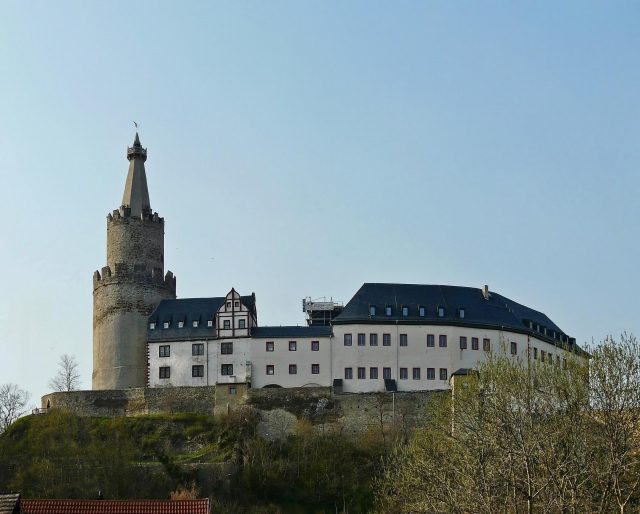
In Weida, Thuringia, the Osterburg is a hilltop castle. Originally built as a Romanesque fortification, it served as the ancestral seat of the bailiffs of Weida and shapes the cityscape today.
History+
The construction of the Osterburg took place between 1163 and 1193 by Heinrich I, the brother of the city's founder, Bailiff Erkenbert II. The complex, initially known as “Das feste Haus zu Weida” (The Strong House of Weida), served as the main seat of the bailiffs of Weida until the early 15th century. It received its current name “Osterburg” in the 17th century, derived from the Latin term for “New Eastland,” referring to the East Thuringian region. During the Peasants' War, the castle was used as a prison. Following the destructions of the Schmalkaldic War and the Thirty Years' War, the castle was rebuilt and redesigned under the Wettins. In 1785, the connecting structure “Röhrwasserhaus” was built over the gate entrance, giving the two main houses their present form.
Source: Wikipedia · Licence: CC BY-SA 4.0 · Image: Thomas Eichler
This description draws on the facts documented in the linked Wikipedia article; Wikipedia content is licensed under CC BY-SA 4.0. Wording and editing: Mobile History.
Location: 50.7725, 12.0569