Museum
ResidenceMadrid
Palacio del Buen Retiro
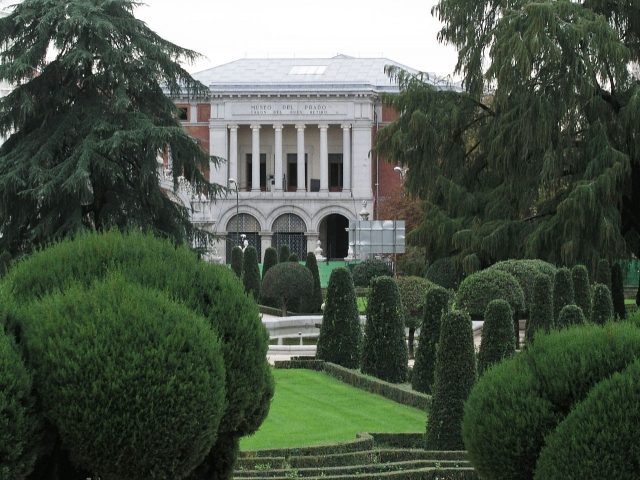
An extensive residential complex, the Palacio del Buen Retiro in Madrid once served as a place of recreation and secondary residence for Philip IV. Of this complex, located in the eastern part of what was then Madrid, only a few buildings and the gardens remain today, forming the current Retiro Park.
History+
The origins of the palace date back to 1629, when the Count-Duke of Olivares, a favorite of Philip IV, began to expand the royal quarters near the San Jerónimo el Real monastery. The king enjoyed walks on the adjacent estate, and thus, starting in 1630, a series of pavilions and offices developed over seven years into a large palace complex. By 1640, the Buen Retiro comprised over 20 buildings, surrounded by gardens and ponds. Although the king spent only a few days a year here, the palace was equipped with an art collection comparable to that of the main residence, the Royal Alcazar. For this purpose, numerous paintings were commissioned in Rome and Naples, including works by Claude Lorrain and Nicolas Poussin. For the Salón de Reinos, depictions of Spanish military triumphs were ordered, including Velázquez's “The Surrender of Breda”.
Source: Wikipedia · Licence: CC BY-SA 4.0 · Image: http://commons.wikimedia.org/wiki/File:Buen_Retiro_Cason_del_Buen_Retiro01.jpg
This description draws on the facts documented in the linked Wikipedia article; Wikipedia content is licensed under CC BY-SA 4.0. Wording and editing: Mobile History.
Location: 40.4152, -3.6820