The remains of the ancient town can be visited
Ancient BuildingRoma
Portico di Ottavia
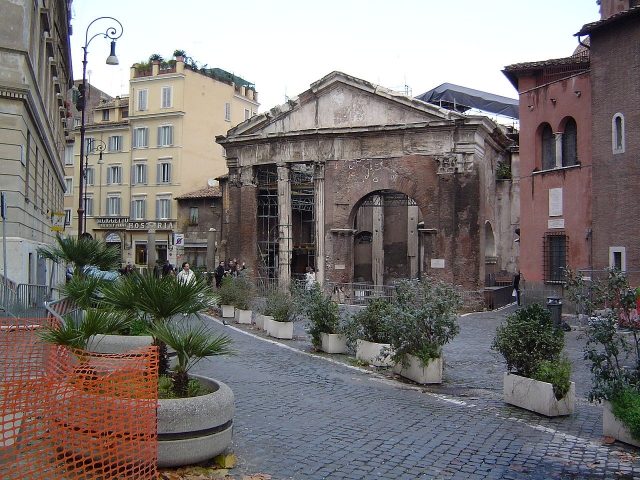
The Portico di Ottavia in Rome, originally conceived as a colonnaded hall, became a cultural and social center.
History+
The origins of the Portico di Ottavia date back to after 146 BC, when Quintus Caecilius Metellus Macedonicus had the Porticus Metelli built. Between 33 and 23 BC, Emperor Augustus commissioned a new structure on the same site, dedicating it to his sister Octavia. This complex housed a library and a curia. Despite damage from fires in 80 and 203 AD, the Portico was always rebuilt. It was renowned for its collection of artworks, including the first publicly displayed statue of a Roman woman, Cornelia, as well as 34 bronze equestrian statues by Lysippos depicting Alexander the Great and his generals.
Source: Wikipedia · Licence: CC BY-SA 4.0 · Image: http://commons.wikimedia.org/wiki/File:P-Octavia1.JPG
This description draws on the facts documented in the linked Wikipedia article; Wikipedia content is licensed under CC BY-SA 4.0. Wording and editing: Mobile History.
Location: 41.8924, 12.4785