Museum
ResidenceDarmstadt
Prinz-Georg-Palais
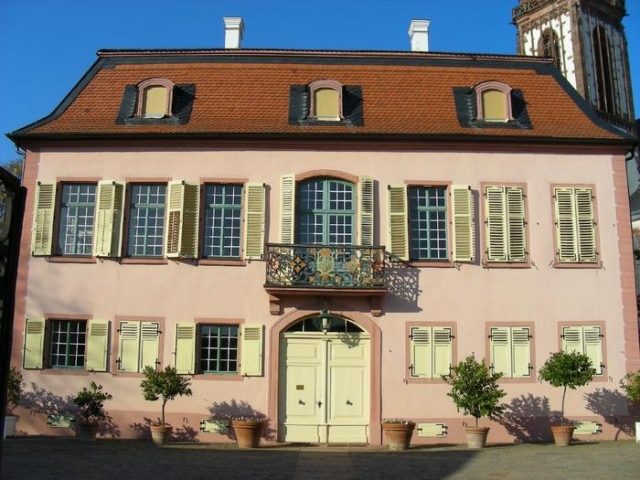
The Prinz-Georg-Palais in Darmstadt is a historic residence with a Rococo garden and a porcelain collection. Originally used as a summer residence, it now houses a museum.
History+
The construction of the Prinz-Georg-Palais took place around 1710 under Landgrave Ernst Ludwig, with Louis Remy de la Fosse, who also worked on Darmstadt Castle, presumed to be the architect. Between 1764 and 1782, the palace served as a summer residence for Prince Georg Wilhelm, which gave it its current name. Another designation, the Porcelain Palace, originated from Grand Duke Ernst Ludwig, who founded the Grand Ducal Hessian Porcelain Collection here. This collection was made accessible to the public in 1908.
Source: Wikipedia · Licence: CC BY-SA 4.0 · Image: http://www.wehrbauten.de/thread.php?threadid=969
This description draws on the facts documented in the linked Wikipedia article; Wikipedia content is licensed under CC BY-SA 4.0. Wording and editing: Mobile History.
Location: 49.8797, 8.6534