ManorOberschöna-Bräunsdorf

Bräunsdorf Manor
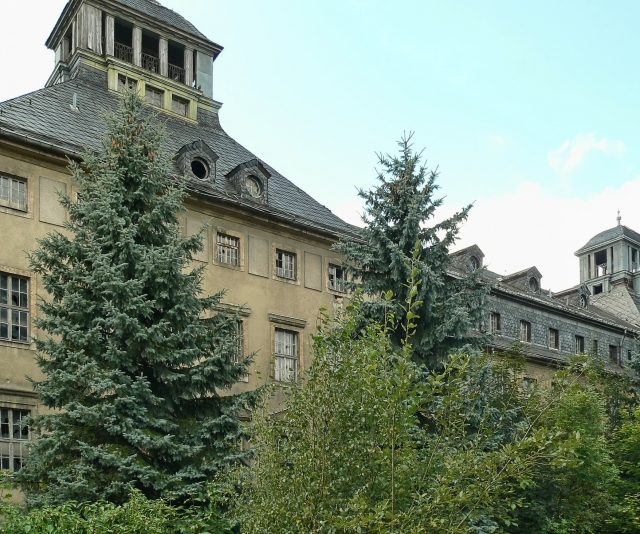
Bräunsdorf Manor

To be privately owned

Bräunsdorf was first mentioned in a document in 1230, but it is assumed that it was founded as a Waldhufendorf (forest-strip village) even before 1162 during the second wave of German eastward settlement. The name Bräunsdorf derives from Bruno, the locator responsible for the settlement. From 1162, the village belonged to the territory of the Cistercian monastery Marienzelle, founded by Margrave Otto the Rich of Meissen, today Kloster Altzella near Nossen. The first mention occurred in connection with a lawsuit by the monastery against Theodorich von Vriberch, who had unjustly appropriated land not far from the village.

With the first flourishing of Freiberg mining, mining activity can also be expected in Bräunsdorf, which, however, probably ceased with the invasion of Adolf von Nassau in 1296. With the introduction of the Reformation, Bräunsdorf came under the Nossen district, but in 1552, Elector Moritz of Saxony transferred it to his chancellor Ulrich Mordeisen as a fief for loyal services. After Moritz's successor August mistakenly pledged it to monastery administrator Kilian Schmidt upon his accession to government in 1553, Mordeisen was only able to take possession of it in 1555 (after a lawsuit) together with 14 other villages. Mordeisen's sons in turn sold Bräunsdorf to Elector Christian I in 1572, and it became part of the Freiberg district office.

During the Thirty Years' War, the village was completely destroyed except for one house and soon bought by the electoral court councilor Berlich, who already owned Wegefarth. In 1664, Romanus Teller acquired Bräunsdorf and led it to new prosperity. He expanded the manor and significantly promoted mining, so that soon 22 mines were established in and around the village, employing between 150 and 550 men. In 1703, a pure mining settlement, the so-called Zechendorf, was founded in the Striegis valley. At the same time, on the opposite, western side of the Große Striegis, the mining town of Siegfried with three mines was established. In 1814, the Bräunsdorf and Siegfried mining districts were united, until all mining was shut down in 1864.

In 1808, the Schubert von Kleefeld family bought the manor, but was forced to auction it again in 1818, which is why the Kingdom of Saxony acquired it and converted it into a state orphanage in 1824. Later it was expanded and became a correctional facility for delinquent children. The supervisors wore uniforms, and if a ward escaped, an old cannon was fired to signal the escape. From then on, the institution determined the life and development of the village, and a third part of the village, the manor and home grounds, emerged away from the existing village centers. After the First World War, the character of the institution changed towards a welfare and educational institution for children, until in 1933 it became a correctional facility for "asocial and unwilling to work" adults, distinguishing between those committed and those in custody. In 1945, the institution became a youth workhouse, and from 1960 until the political change in 1989, a special children's home for difficult-to-raise children. After a longer period of vacancy, the manor and home grounds were taken over by the German Elite Academy (DEA) in 2003, which wanted to develop it into a conference and training center. The villa was renovated, but financing for the remaining buildings has been difficult since the banking crisis. In April 2011, the roof of the listed manor house collapsed, and for the responsible Lower Monument Protection Authority, "the manor house seems lost."

Take Mobile History with you

You are reading this text for free. Premium adds what matters on the road: descriptions read aloud, sites found through your camera, whole regions taken offline.

  • Every description, including the ~17,700 Premium sites
  • Audio guide: have descriptions read to you on location
  • AR finder: see sites through your camera, with distance and bearing
  • Unlimited saved sites

14 days free, then from €2.99 a month. Cancel anytime.

Source: Wikipedia · Licence: CC BY-SA 4.0 · Image: Thomas Eichler

This description draws on the facts documented in the linked Wikipedia article; Wikipedia content is licensed under CC BY-SA 4.0. Wording and editing: Mobile History.

Location: 50.9377, 13.2185