To be privately owned
ManorDanków (Tankow)
Tankow Manor
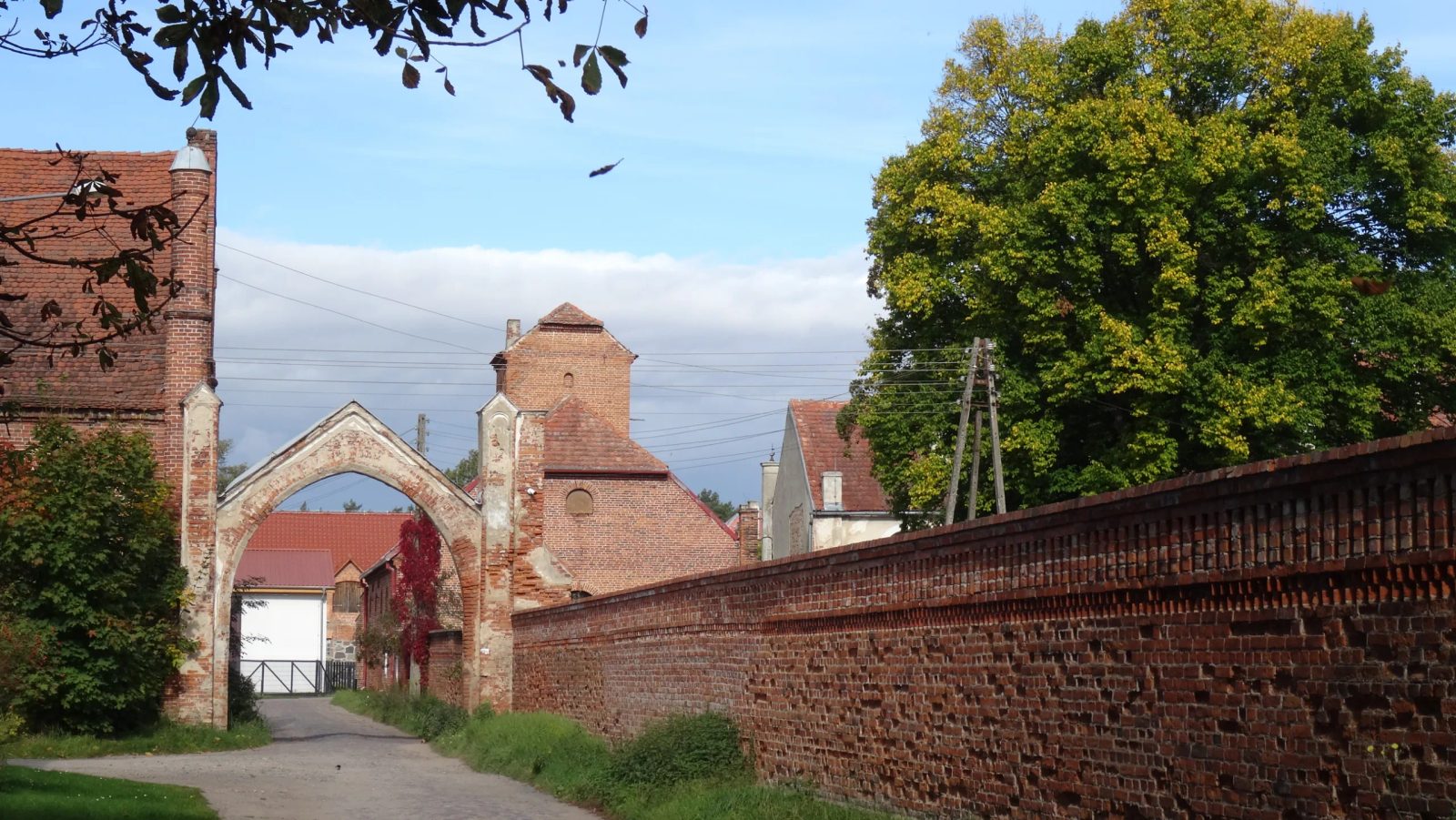
Danków (German Tankow) is a village in the urban and rural municipality of Strzelce Krajeńskie in the Powiat Strzelecko-Drezdenecki (Friedeberg-Driesen district) of the Polish Lubusz Voivodeship.
The locality, which later became a manor, was in the 14th century an immediate sovereign town, on a par with the towns of Friedeberg and Woldenberg, with a solid castle. The margraves Otto IV, Konrad I, Johann IV and Woldemar, who frequently hunted in the surrounding forests – referred to in the 14th century as Tankow Heath, in modern times as Wildenow Forest – issued a charter of rights for the town of Kallies here in 1303. Fairs took place here next to the church. Buckwheat was cultivated in the fields around Tankow, and the yields from it were so significant that they were listed among the state revenues in Charles IV's land book. In 1352, a Frankfurt citizen received the castle and the entire Tankow Heathland, including the associated so-called Landsberg Heath. In 1853, Margrave Ludwig granted Tankow Lake and the heath water to the Tankow council members and common citizens. In 1465, the castle and the small town, which subsequently declined into a village, came into the possession of the Marchian family Papstein, who owned it until their extinction (approx. 1790). In 1496, Tankow had been transformed into a hereditary fief by Elector Frederick II. From about 1793, the manor was owned by the Massow family, who still possessed it after the turn of the century. At the beginning of the 19th century, there were eleven farmers, six cottagers, a parsonage farmer, a blacksmith, a fisherman, two separate watermills and a forester's lodge with 10,000 acres of forest in the village. After the middle of the 19th century, there were still 8300 acres of forest here. In 1820, the Franconian noble family von Brand from Gut Lauchstädt bought the castle. In 1828, the widow v. Brand, née v. Sack, is named as the owner of the estate. Camillus von Brand had the margravial castle demolished in 1830. He built a new castle in another location. Through marriage, the local manor came to the von Erxleben family, who had their main seat in Selbelang near Berlin. The bride was the Fideikommiss lady Elisabeth von Brand (1836–1910); she married Lieutenant Otto Ludwig von Erxleben (1817–1892), son of Otto von Erxleben-Selbelang. In 1933, the officer Wichard von Alvensleben (1902–1982) married the last owner of the estate of this name, Cora von Erxleben-Selbelang (1905–1945).
Until 1945, the village belonged to the Friedeberg Nm. district, from 1816 to 1938 in the administrative district of Frankfurt of the Prussian province of Brandenburg, from October 1938 to 1945 in the administrative district of Grenzmark Posen-Westpreußen of the province of Pomerania. Towards the end of the Second World War, the region was occupied by the Red Army in spring 1945. The estate owner Cora von Alvensleben shot herself on January 29, 1945, upon the arrival of Soviet troops. The Red Army soldiers plundered the castle and burned it down. Soon after, Tankow was placed under Polish administration. Subsequently, the inhabitants of Tankow were expelled. Tankow was renamed Danków.
Take Mobile History with you
You are reading this text for free. Premium adds what matters on the road: descriptions read aloud, sites found through your camera, whole regions taken offline.
- Every description, including the ~17,700 Premium sites
- Audio guide: have descriptions read to you on location
- AR finder: see sites through your camera, with distance and bearing
- Unlimited saved sites
14 days free, then from €2.99 a month. Cancel anytime.
Source: Wikipedia · Licence: CC BY-SA 4.0 · Image: Foto: Jörg Heldt (Community)
This description is a machine translation of an excerpt from the linked Wikipedia article. The source text was written by its authors, the translation is by Mobile History; like the original it is licensed under CC BY-SA 4.0.
Location: 52.9400, 15.3588