The roman Bath House can be visited
Ancient BuildingBearsden
Roman Bath House Bearsden
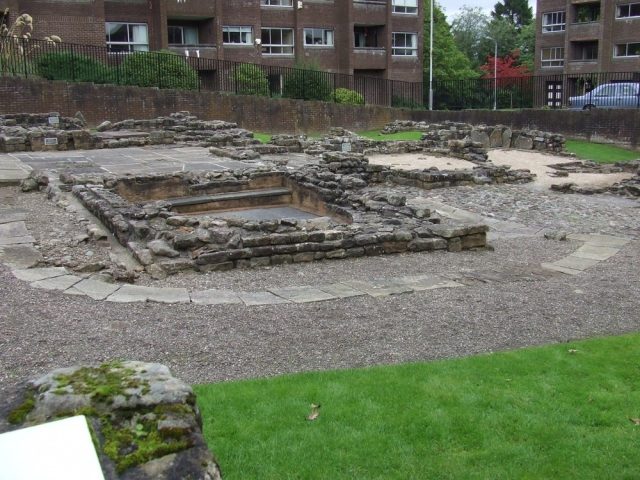
The Roman Bathhouse Bearsden is located in Bearsden, Scotland. This complex is a relic from antiquity.
The origins of the Roman presence in Bearsden date back to the second century AD, when a 2.5-hectare Roman fort was established here. Under Emperor Antoninus Pius, this military installation was built between 142 and 144 AD. The bathhouse visible today, a part of the fort, was constructed around 142-143 AD. Its discovery occurred in 1973 during construction work.
The Roman Bathhouse Bearsden is located in the town of Bearsden in East Dunbartonshire, Scotland, United Kingdom. It is situated at an elevation of approximately 59 meters above sea level.
Visitors can explore the remains of the Roman bathhouse.
Want to learn more about this site?
The full description is available with Premium — plus offline packages, audio guide and high-resolution images.
- Every description, including the ~17,700 Premium sites
- Audio guide: have descriptions read to you on location
- AR finder: see sites through your camera, with distance and bearing
- Unlimited saved sites
14 days free, then from €2.99 a month. Cancel anytime.
Already Premium and still locked?
Sign-in works per address. On mobilehistory.app you need to sign in once separately — your Premium then applies here too.
Sign in →Source: Wikipedia · Licence: CC BY-SA 4.0
This description draws on the facts documented in the linked Wikipedia article; Wikipedia content is licensed under CC BY-SA 4.0. Wording and editing: Mobile History.
Location: 55.9199, -4.3279