The ruins of the monastery are open to visitors
MonasterySaint-Michel-en-l'Herm
Abbaye royale de Saint-Michel-en-l'Herm
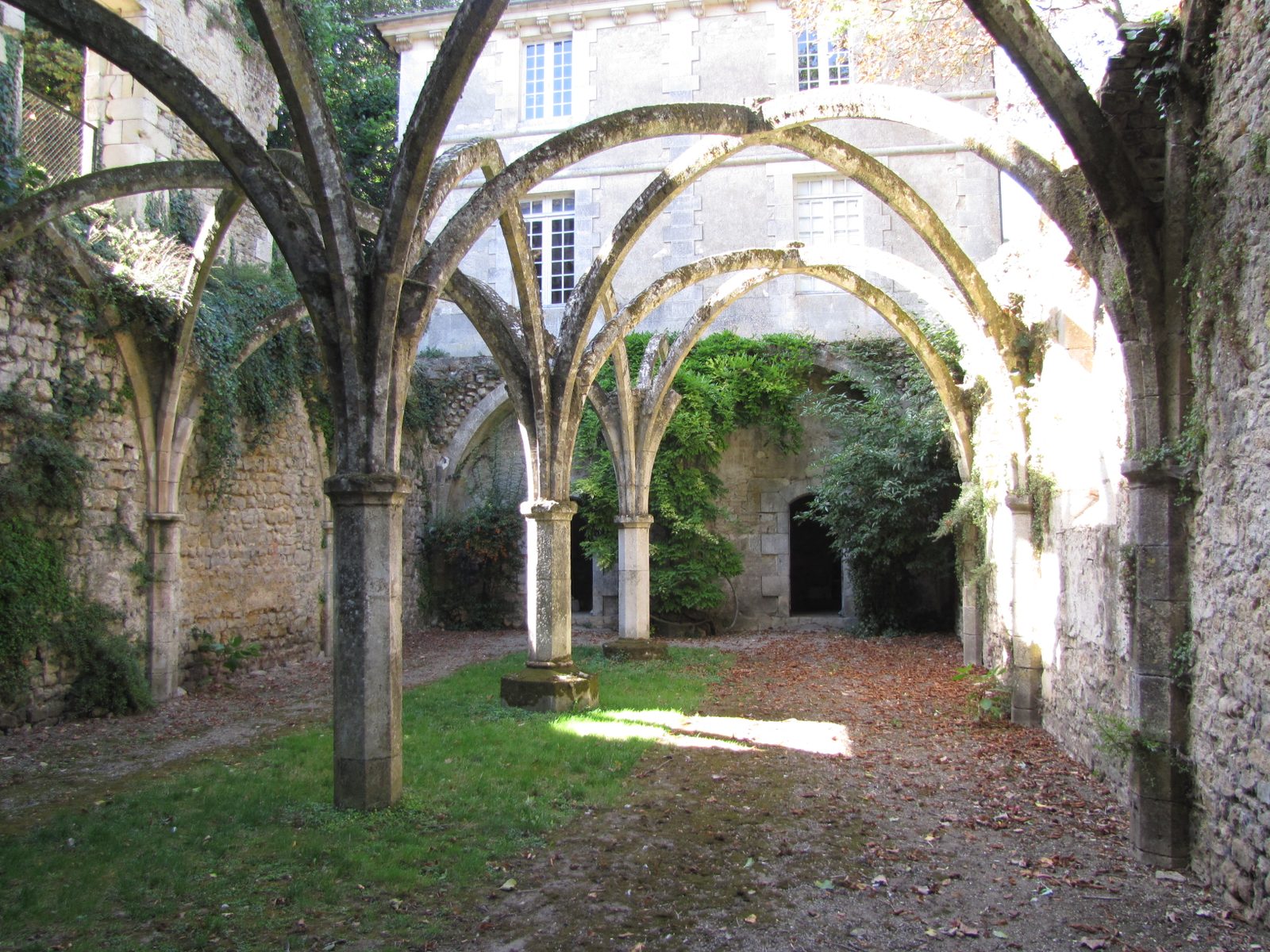
The Abbaye Royale de Saint-Michel-en-l’Herm is a former Benedictine monastery located in the commune of Saint-Michel-en-l’Herm, in the Vendée department of the Pays de la Loire region in western France, in the heart of the Marais Poitevin.
It is one of the oldest abbeys in the Marais Poitevin. Founded around 682 at the request of Ansoald, Bishop of Poitiers, thirteen monks from the abbey of Noirmoutier settled on a limestone islet known as Condate (or Vieux-Condet) in the Gulf of the Pictons and dedicated the new foundation to the Archangel Michael. The abbey played a central role in the creation of the drained marshland: its wealth, derived largely from the salt trade and donations, financed major works of embankment, canalisation and drainage that transformed the surrounding wetlands into productive land for livestock and agriculture. The powerful local lord Savary de Mauléon also fortified the site.
The abbey suffered repeated destructions (including Viking raids from 877 onwards) and successive rebuilds. A new abbey church was consecrated in 1047 by Abbot Aszo in the presence of important Aquitanian lords. After the Concordat of Bologna in 1516, François I declared it a royal abbey; thereafter it was held by commendatory abbots drawn from the high aristocracy, among them Charles de Bourbon and, as the last, Cardinal Mazarin (1647–1661). In the late 17th and early 18th centuries the Maurist congregation undertook a major reconstruction under the architect François Le Duc. The monks were dispersed at the French Revolution (1790).
Notable surviving elements include the square chapter house (rediscovered in the 20th century), whose façade is decorated with finely sculpted capitals and which contains the tomb of Abbot Aszo (died 1048); the open-air chauffoir (reassembled in the 19th century); the large refectory, partly buried under 17th-century fill; and the Logis de l’Aiguier with its 18th-century dovecote. Successive building campaigns raised the ground level by about ten metres above the original soil.
The abbey has been classified as a Monument historique since 1973. It has been private family property since 1818 and remains so today. Guided tours (gardens, chauffoir, chapter house and refectory) are offered, mainly in summer.
Take Mobile History with you
You are reading this text for free. Premium adds what matters on the road: descriptions read aloud, sites found through your camera, whole regions taken offline.
- Every description, including the ~17,700 Premium sites
- Audio guide: have descriptions read to you on location
- AR finder: see sites through your camera, with distance and bearing
- Unlimited saved sites
14 days free, then from €2.99 a month. Cancel anytime.
Source: Wikipedia · Licence: CC BY-SA 4.0 · Image: Spouik · Wikimedia Commons · CC BY-SA 4.0
This description draws on the facts documented in the linked Wikipedia article; Wikipedia content is licensed under CC BY-SA 4.0. Wording and editing: Mobile History.
Location: 46.3531, -1.2503