The remains of the Castle can be visited
CastleGehülz
Heunischen Castle (Ruin)
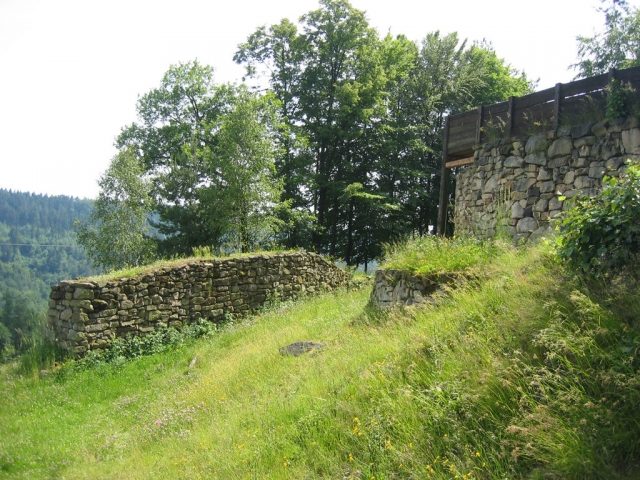
The Heunischenburg ruin in Bavaria is considered the oldest scientifically investigated stone fortification north of the Alps in Europe. It is situated on a mountain spur.
History+
The Heunischenburg experienced three main settlement periods. Initially, it consisted of a timber and earth fortification. In a later phase, this was reinforced by a sandstone wall, which was likely destroyed during combat. The last expansion phase saw the construction of a defensive complex. Particularly noteworthy is the 110-meter-long and 2.6-meter-wide sandstone wall on the northeastern flank, complemented by a berm and a ditch. The complex also features a pincer gate construction and a sally port, indicating late Mycenaean influences and contacts with Mediterranean cultures. Archaeological finds, especially a large number of weapons, underscore the military significance of the Heunischenburg, setting it apart from other Bronze Age settlements. The name “Heunischenburg” is often associated with “Heunen” (giants), which could refer to gigantic builders from a legendary past.
Source: Wikipedia · Licence: CC BY-SA 4.0
This description draws on the facts documented in the linked Wikipedia article; Wikipedia content is licensed under CC BY-SA 4.0. Wording and editing: Mobile History.
Location: 50.2426, 11.2655