The remains of the Castle can be visited
CastleLenggries
Hohenburg Castle (Ruin)
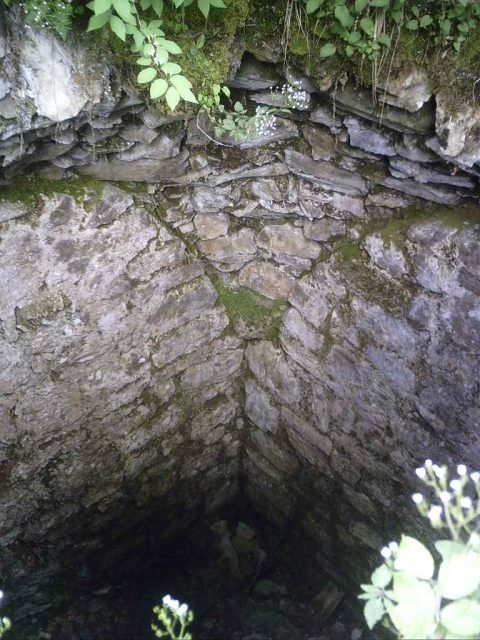
The Hohenburg (formerly sometimes also Hochenburg) was a castle near the town of Lenggries in the Isarwinkel region of Bavaria. Once, this castle was the most important center of power in the region, until its destruction in a devastating great fire on July 21, 1707. Today, ruins bear witness to the former glory of this fortress.
The Hohenburg was first mentioned in a document around 1100 and was for centuries the most significant center of power in the Isarwinkel. At the foot of the castle, a settlement of rafters and craftsmen developed, which is today's Lenggries.
The castle, situated on a hill by the Hirschbach, originally belonged to the Lords of Thann, came into the possession of the Lords of Tölz at the end of the 12th century, and in 1262 to the Wittelsbach family. From 1294, this castle was owned by the Lords of Egling. They were followed in 1396 by the Lords of Maxlrain, who undertook a major reconstruction and expansion between 1410 and 1420. In 1522, the stately castle came into the possession of the House of Schellenberg. Dionys von Schellenberg finally sold the castle and court in 1566 to his nephew Hanns Paul Herwarth, in whose family the ownership of the castle and Hofmark Hohenburg remained until 1800. Until the mid-16th century, the Hohenburg remained a defensive castle, without a palace character. From 1570, transformations began that changed the appearance of the castle and gave it a more habitable, palace-like expression (a so-called "Burgschloss").
In 1705, Lenggries and the castle were at the center of the Bavarian People's Uprising, as the first resistance against the Austrian occupiers was organized here. This uprising found its tragic end in the Sendling Murder Christmas.
During the War of the Spanish Succession, Austrian troops occupied the castle, and on July 21, 1707, it was completely destroyed by a fire that arose for unexplained reasons. Within an hour, the great fire engulfed the entire castle. The fire report from Judge Mayr to Count Herwarth read:
“Due to carelessness or malice of drunken soldiers, the exact details are not ascertainable from the records, on Thursday, July 21, around 10 o'clock, the great hall, which served as a barracks for the soldiers, went up in flames. The fire spread incredibly quickly. The hussars made noise when the fire broke out, but calmly left the castle, camped by the pond, and watched the fire with scornful laughter.”
Source: Wikipedia · Licence: CC BY-SA 4.0
This description draws on the facts documented in the linked Wikipedia article; Wikipedia content is licensed under CC BY-SA 4.0. Wording and editing: Mobile History.
Location: 47.6731, 11.5910