The remains of the Castle can be visited
CastleKarlstein
Karlstein Castle (Ruin)
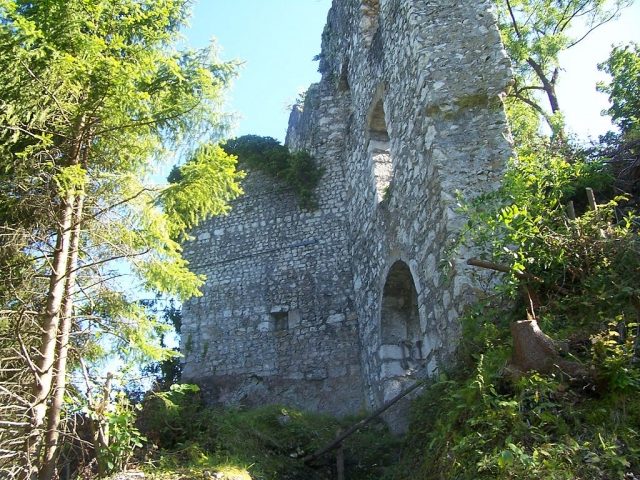
The Karlstein Ruin is situated on a steep rock above Lake Thumsee. This site in the Berchtesgadener Land is a destination for hikers and history enthusiasts.
History+
The origins of the Karlstein fortification date back to just before 1150, when Konrad von Peilstein began its construction. The Peilstein family likely responded to a call from the Archbishop of Salzburg, who had appointed them as secular representatives in court. The castle was first documented in 1208. Just ten years later, in 1218, Karlstein fell to the Duke of Bavaria, who subsequently entrusted its administration to his vassals. A castle captain named Karl, who lived here at the end of the 12th century, may have given the entire complex its name. From the late Middle Ages, Karlstein held lower jurisdiction in the Hofmark. The Dukes of Bavaria granted the castle and the Hofmark, in exchange for payments, to patricians from Reichenhall or high-ranking officials seeking a residence. Under the Fröschl von Marzoll and Tauerstein family, the castle was converted into a palace, but it fell into disrepair by the end of the 17th century. A round-arched gate from this late period is still preserved. In 1671, the dilapidated western outer wall was demolished.
Source: Wikipedia · Licence: CC BY-SA 4.0
This description draws on the facts documented in the linked Wikipedia article; Wikipedia content is licensed under CC BY-SA 4.0. Wording and editing: Mobile History.
Location: 47.7186, 12.8408