The remains of the ancient town can be visited
Ancient BuildingRoma
Saepta Julia
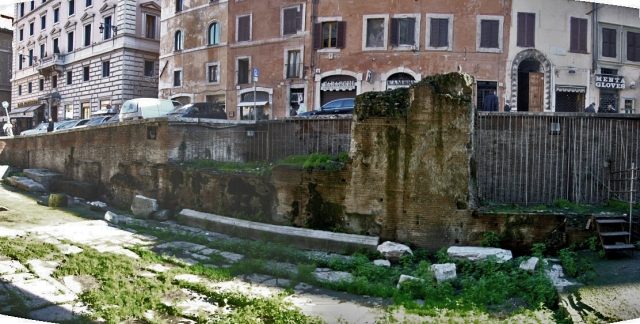
The Saepta Julia was a multi-functional portico in ancient Rome. Originally conceived as a venue for political assemblies, it evolved into a center for entertainment and commerce.
History+
The construction project of the Saepta Julia was initiated by Julius Caesar, who aimed to create an assembly place for the elections of the comitia centuriata. This marble structure was intended to replace a fenced-in area known as an “ovile” (sheepfold). However, the completion of the 400 by 60 meter complex occurred in 26 BC under the direction of Lepidus and Agrippa, with Agrippa dedicating the hall to the Julian family. After the abolition of the comitia centuriata in 14 AD by Tiberius, the use of the Saepta Julia changed.
Source: Wikipedia · Licence: CC BY-SA 4.0 · Image: http://commons.wikimedia.org/wiki/File:Pigna_-_muro_dei_Saepta_Iulia_a_via_della_Minerva_1060180-1.JPG
This description draws on the facts documented in the linked Wikipedia article; Wikipedia content is licensed under CC BY-SA 4.0. Wording and editing: Mobile History.
Location: 41.8983, 12.4772