CastleSt. Valentin-Hofkirchen

Seggau Castle
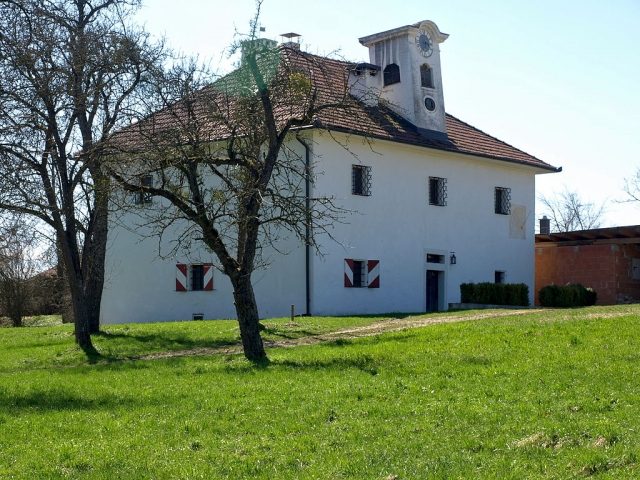
Seggau Castle

To be privately owned

The Historic Building: A Journey Through Time+
From Medieval Origins to Baroque Splendor+

The Foundation and Early Years

The origins of the historic building, known today as "Schloss Wartenstein," date back to the 12th century. Initially, it served as a fortified castle, strategically positioned on a hill overlooking the Rhine Valley. Its primary purpose was to control trade routes and protect the local populace. Archaeological findings suggest a simple, yet robust, construction, typical of the Romanesque period.

Transformations in the Renaissance

During the 15th and 16th centuries, the castle underwent significant transformations. With the decline of its military importance, it was gradually converted into a residential palace. Influences of the Renaissance are evident in the expanded windows, more elaborate facades, and the addition of decorative elements. The former defensive walls were partially replaced by terraced gardens, reflecting a shift towards comfort and aesthetic appeal.

Baroque Redesign and Later Modifications+

The Baroque Masterpiece

The early Baroque palace was redesigned around the turn of the 17th/18th century.

This period marked the most extensive redesign of Schloss Wartenstein. Under the patronage of Prince-Bishop Johann Hugo von Orsbeck, the palace was transformed into a magnificent Baroque residence. Renowned architects and artists were commissioned to create opulent interiors, grand staircases, and a lavish chapel. The Baroque style, characterized by its dramatic flair and rich ornamentation, is still prominently visible in many parts of the building today.

19th and 20th Century Adaptations

In the 19th century, the palace saw further, albeit less drastic, modifications. Some rooms were adapted to the prevailing Neoclassical tastes, and modern amenities, such as improved heating systems, were introduced. The 20th century brought challenges, including periods of neglect and damage during wartime. However, dedicated restoration efforts in the latter half of the century ensured the preservation of its historical integrity.

Schloss Wartenstein Today: A Cultural Monument+

Current Use and Public Access

Today, Schloss Wartenstein serves as a vibrant cultural monument. It houses a museum showcasing its rich history, from its medieval beginnings to its Baroque zenith. Various rooms are open to the public, offering insights into the lives of its former inhabitants. The palace also hosts art exhibitions, concerts, and historical lectures, making it a dynamic center for cultural exchange.

Preservation and Future Outlook

The preservation of Schloss Wartenstein is an ongoing endeavor. Extensive conservation projects are regularly undertaken to maintain the building's structural integrity and restore its artistic heritage. Future plans include further research into its architectural history and the development of educational programs to engage a wider audience. Schloss Wartenstein remains a testament to centuries of architectural evolution and a cherished landmark for generations to come.

Take Mobile History with you

You are reading this text for free. Premium adds what matters on the road: descriptions read aloud, sites found through your camera, whole regions taken offline.

  • Every description, including the ~17,700 Premium sites
  • Audio guide: have descriptions read to you on location
  • AR finder: see sites through your camera, with distance and bearing
  • Unlimited saved sites

14 days free, then from €2.99 a month. Cancel anytime.

Source: Wikipedia · Licence: CC BY-SA 4.0 · Image: http://commons.wikimedia.org/wiki/File:2013.04.15_-_St._Valentin_-_Schl%C3%B6ssl_Seggau_-_04.jpg

This description draws on the facts documented in the linked Wikipedia article; Wikipedia content is licensed under CC BY-SA 4.0. Wording and editing: Mobile History.

Location: 48.1366, 14.5428