To be privately owned
CastleVienna (Wien)
Alterlaa Castle
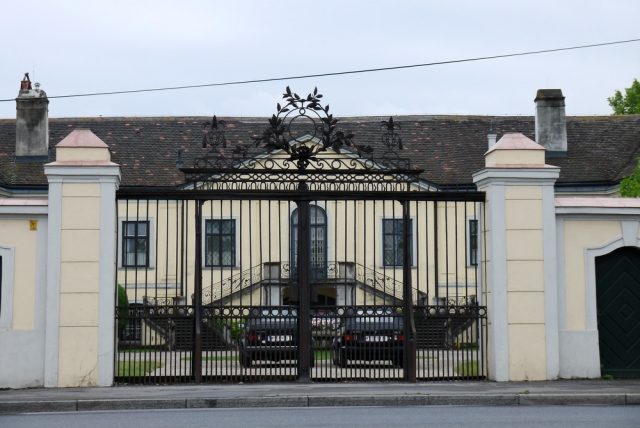
Alterlaa Palace, also known as Erlaa Palace, is a historic building in Vienna's 23rd district, Liesing. It evolved from a manorial seat into a palace featuring one of Vienna's oldest English landscape gardens.
History+
The first documented mention of the Erlaa manorial seat dates back to 1244. By the 17th century, the complex had already developed into a four-winged palace, as evidenced by an engraving by Georg Matthäus Vischer from 1672. The palace chapel was consecrated in 1726 by Vienna's Archbishop Sigismund von Kollonitz, at which time Alterlaa was owned by the Counts of Seillern. In 1765, Georg Adam von Starhemberg acquired the palace. Between 1766 and 1770, a late Baroque-Classicist renovation took place, likely based on plans by court architect Nikolaus Pacassi. During this period, the palace park was also laid out. The palace served as quarters for Napoléon Bonaparte's troops in 1805 and 1809, and for those of Joseph Jelačić von Bužim in 1848. After 1880, a part of the palace housed a private hospital for the poor. In 1918, Alterlaa Palace came into the possession of Hans von Brenner, whose descendants remain the owners today. A further renovation in 1919/20 led to the demolition of the front wing and the palace chapel; instead, an honorary courtyard and a new front wall were constructed, among other changes.
Source: Wikipedia · Licence: CC BY-SA 4.0 · Image: http://commons.wikimedia.org/wiki/File:Schloss_Alterlaa_Tor.JPG?uselang=de
This description draws on the facts documented in the linked Wikipedia article; Wikipedia content is licensed under CC BY-SA 4.0. Wording and editing: Mobile History.
Location: 48.1475, 16.3067