Hotel
CastleAichach - Klingen
Blumenthal Castle
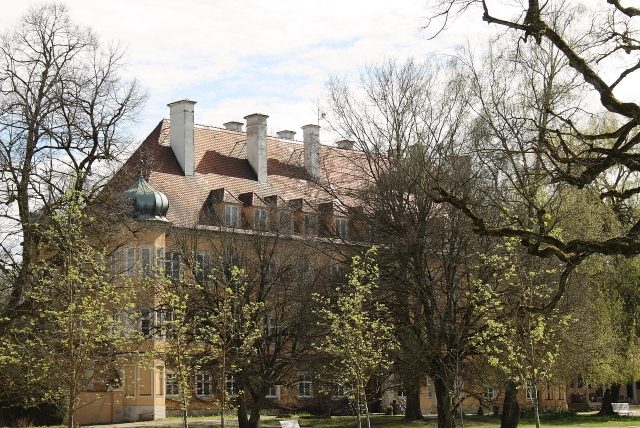
Blumenthal Castle in the hamlet of Blumenthal is located on the Ecknach river between the Aichach district of Klingen and the municipality of Sielenbach, or the Bavarian pilgrimage site of Maria Birnbaum (Aichach-Friedberg district). The history of the castle dates back to the 13th century.
History+
Presumably around 1254, the Teutonic Order acquired the Hofmark Blumenthal and managed it through an order house. It was first mentioned in a document in 1296 under the name "Blümenthal". Already at this time, Blumenthal received lower jurisdiction from the Bavarian Duke. It first served as a commandery (leading order house) of the order in the Teutonic Bailiwick of Franconia. After the abandonment of the Teutonic Order house in Aichach in 1396, it became the main seat of the commanders (heads of the order houses). In 1405, the castle received the right to serve alcohol from Duke Stephan III of Bavaria-Ingolstadt. The originally four-winged moated castle in the Renaissance style with an extensive forecourt was built between 1568 and 1622. During this time, its own castle brewery was established around 1582, and around 1608, the Georgiturm was built near the castle. The two towers of the castle were built around 1650. The east tower primarily served as a prison. From 1719–1721, the castle church was extended and baroqueized by Commander Johann Franz Ernst Freiherr von Weichs. Bandelwerk stucco with musical angels was added, and the Munich painter Melchior Steidl created the ceiling frescoes. In these years, the administrator's house, the brewery, and the inn were also newly built. The Fischerhäusl south of the east tower was built around 1750 and housed the forge. On the other side of the tower, the Jägerhaus was built at the same time. In 1805, the complex was confiscated by the Duchy of Bavaria and in 1806 handed over to Count Maria Joseph Fugger von Dietenheim. Between 1822 and 1836, the four-sided moated castle was largely demolished by Count Karl Rasso, and at the same time, the moats were filled in. Only the south wing with the castle church remained. The altar area of the church was probably damaged in the process and therefore rebuilt in the middle of the 19th century. The castle first served as a residence for the Fuggers. In 1871, due to a lack of heirs, the estate was handed over to the Princely and Comital Fugger Foundation Administration in Augsburg and from then on served agriculture. A total of 800 hectares were cultivated and leased to the surrounding farmers in Andersbach, Matzenberg, and Wilpersberg, and forestry operations were established. The agricultural operation was managed in the farm buildings located on the west side. The castle also housed the administrators, as well as the servants, milkers, and the pastor. From 1950, the castle was converted and used as a Fugger retirement home with 27 nursing places.
Source: Wikipedia · Licence: CC BY-SA 4.0 · Image: https://commons.wikimedia.org/wiki/File:Aichach_Schloss_Blumenthal_60.JPG?uselang=de
This description is a machine translation of an excerpt from the linked Wikipedia article. The source text was written by its authors, the translation is by Mobile History; like the original it is licensed under CC BY-SA 4.0.
Location: 48.4209, 11.1476