CastleBremervörde

Bremervörde Castle

Bremervörde Castle

Museum

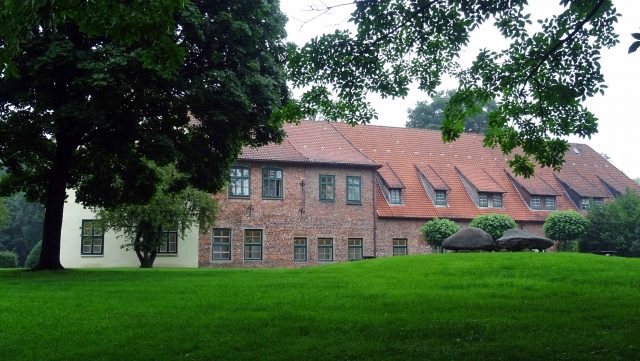
The fortified Bremervörde Castle in Bremervörde, northern Lower Saxony, was the largest castle complex in the region. After various warlike conflicts, it was razed and largely demolished in 1682. The preserved Chancellery building now houses a museum.

From Castle to Palace

The first castle complex on the grounds of the later palace was built at the behest of Lothar III at the beginning of the 12th century, between 1112 and 1122. Due to a ford over the Oste river and its location on the historic Oxen Way, the site was of strategic importance.

The castle, called Castrum Voerde, changed hands several times after disputes, passing from the Counts of Stade to Henry the Lion and finally to the Archbishopric of Bremen in 1219. Located approximately in the center of the diocese, the castle developed over the next centuries into the largest fortress in the region and the seat of the central administration of the episcopal lands and the bailiffs. For several of the Bremen bishops, the complex served as a residence and was gradually expanded and developed from a castle into a palace. From the 16th century onwards, most of the building material came from the brickworks in nearby Bevern.

At the beginning of the Thirty Years' War, the castle complex consisted of a fortified island, surrounded by the Oste river, which supported the multi-winged, magnificent Renaissance palace. Opposite the palace island was an outwork secured with bastions, and to the south and east of the palace area, several representative pleasure and vegetable gardens were laid out.

During the war, the town and the castle were besieged and severely damaged in 1627 and 1646; the castle experienced another siege during the Dano-Swedish Wars in 1657. During Swedish rule, the new rulers moved their seat of government to Stade and to the newly built country palace of Agathenburg. The formerly grand castle complex in Bremervörde lost its importance. In 1682, the fortress was largely razed, and the ruins of the palace and the defensive structures were demolished. Some of the freed building material was used to construct the Schwedenspeicher in Stade.

The Castle Grounds Today

From the air, the basic structure of the fortress area, especially the outwork, can still be partially recognized. However, the castle islands in the Oste, the former ramparts and moats, have been reclaimed by nature over the past three centuries and now appear as a natural landscape.

No visible remains of the castle itself have been preserved. From the former outwork, the so-called Chancellery building – today the oldest building in the city – and a former stable still stand. Both buildings served as the district house and district archive. Today, they house a museum. Opposite the Chancellery building is the new district house, a building from the 1960s, which occupies approximately the site of the former palace.

The Bachmann Museum

The Bachmann Museum is located in the former archiepiscopal Chancellery building. The museum houses various exhibits on the archaeology, geology, and history of the region, including the bog body from Bremervörde Gnattenbergswiesen. Furthermore, various exhibitions are presented here, and readings or lectures are held.

Take Mobile History with you

You are reading this text for free. Premium adds what matters on the road: descriptions read aloud, sites found through your camera, whole regions taken offline.

  • Every description, including the ~17,700 Premium sites
  • Audio guide: have descriptions read to you on location
  • AR finder: see sites through your camera, with distance and bearing
  • Unlimited saved sites

14 days free, then from €2.99 a month. Cancel anytime.

Location: 53.4831, 9.1514