The Castle can be visited
CastleSchwielowsee-Caputh
Caputh Castle
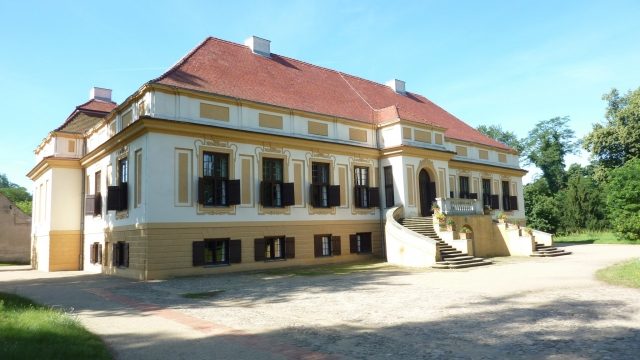
Caputh Palace is located in the Caputh district of the municipality of Schwielowsee, near the Brandenburg state capital Potsdam, directly on Lake Templin.
Caputh Palace is the only preserved palace from the Brandenburg Early Baroque period in the Potsdam area. As early as the 16th century, Electress Katharina had a summer residence here, but it was largely destroyed during the Thirty Years' War. The electoral quartermaster Philip de Chiese (also Philippe de la Chièze) began rebuilding the palace in 1662 on behalf of the Great Elector Friedrich Wilhelm.
In 1667, Caputh Palace and the estate, with all its lands and vineyard, returned to the Great Elector. De Chiese received in return a property of 150 Hufen (approx. 2,600 hectares) in the Memel Delta in East Prussia. The Great Elector gifted the early Baroque pleasure palace in 1671 to his second wife, Electress Dorothea of Brandenburg, who expanded and richly furnished the palace. Until 1713, it was primarily used for festivities and hunting stays. In 1820, the Prussian Lieutenant General August von Thümen bought Caputh Palace. In 1908, it passed by inheritance into the possession of the von Willich family until its forced expropriation in 1947 by the communists. The palace ensemble, expropriated as part of the land reform, was used as a vocational training institution from 1947. The palace largely acquired its current appearance from Electress Dorothea.
The palace is considered the only one in the Potsdam cultural landscape that has been preserved from the time of the Great Elector. It was restored from 1995 to 1999 for approximately five million euros.
Furnishings+
Among the attractions are the lavishly decorated ballroom and, in the basement, the Tile Hall, whose walls and ceiling vaults King Friedrich Wilhelm I had furnished with approximately 7,500 blue-and-white Dutch faience tiles as a dining hall for his hunting parties. In almost all rooms, the original ceiling designs with stucco work and ceiling paintings have been preserved. The interior includes lacquer furniture, porcelains, faiences, and sculptures from Dorothea's estate. A table made of dark ebony with heart-shaped ivory inlays comes from the Berlin City Palace.
The painting collection consists predominantly of Dutch painting, as the Great Elector's first marriage to Luise Henriette of Orange also influenced the style of the electoral court. The painting Lady with Parrot by Willem van Mieris (1662-1747) was taken abroad as looted art after the Second World War. The Prussian Palaces and Gardens Foundation Berlin-Brandenburg had long sought the return of the painting, which had been stolen by British soldiers from the Grunewald Hunting Lodge in Berlin in 1945. The artwork can be seen in the Electress's tea cabinet.
Source: Wikipedia · Licence: CC BY-SA 4.0 · Image: Joachim Schneeleopard
This description draws on the facts documented in the linked Wikipedia article; Wikipedia content is licensed under CC BY-SA 4.0. Wording and editing: Mobile History.
Location: 52.3492, 13.0001