Administration of the zoo Berlin
CastleBerlin-Friedrichsfelde
Friedrichsfelde Castle
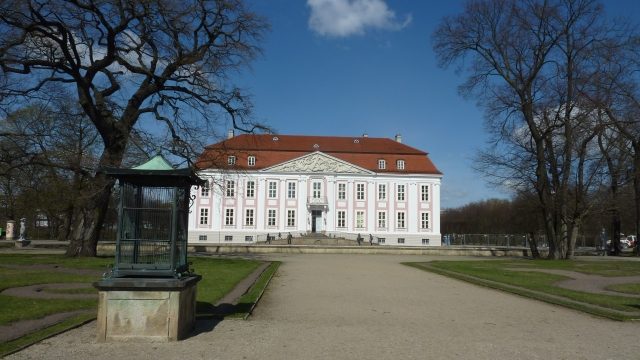
The Schloss Friedrichsfelde, a structure with roots in the late 17th century, is now considered an example of early Classicist architecture. Once conceived as a rural manor, it reflects a history shaped by royal owners, noble families, and cultural events.
History+
The castle's origins date back to 1695 when it was built as Schloss Rosenfelde for Benjamin Raule, the Electorate of Brandenburg's General Director of Marine Affairs. Likely designed by Johann Arnold Nering in the Dutch country house style, it faced its first turning point in 1698 when Raule fell from grace and the estate passed to the Prussian king, who renamed it Friedrichsfelde. In 1717, it was granted to Margrave Albrecht Friedrich von Brandenburg-Schwedt and expanded in 1719 by court architect Martin Heinrich Böhme. After the Margrave's death in 1731, his son Karl inherited the castle. In 1762, the castle came into the hands of Prince Ferdinand of Prussia, a brother of Frederick the Great. Louis Ferdinand of Prussia was born there in 1772. Later, in 1785, the castle was sold to the Duke of Courland, followed by further changes of ownership to court printer Georg Jakob Decker (1799) and Duchess Katharina von Holstein-Beck (1800), who resided there until her death in 1811 and had the facade redesigned in the early Classicist style. From July 1814 to February 1815, it served as a prison for King Frederick Augustus I of Saxony.
Source: Wikipedia · Licence: CC BY-SA 4.0 · Image: Joachim Schneeleopard
This description draws on the facts documented in the linked Wikipedia article; Wikipedia content is licensed under CC BY-SA 4.0. Wording and editing: Mobile History.
Location: 52.5047, 13.5237