Cultural Events
CastleBad Grönenbach
Castle Grönenbach
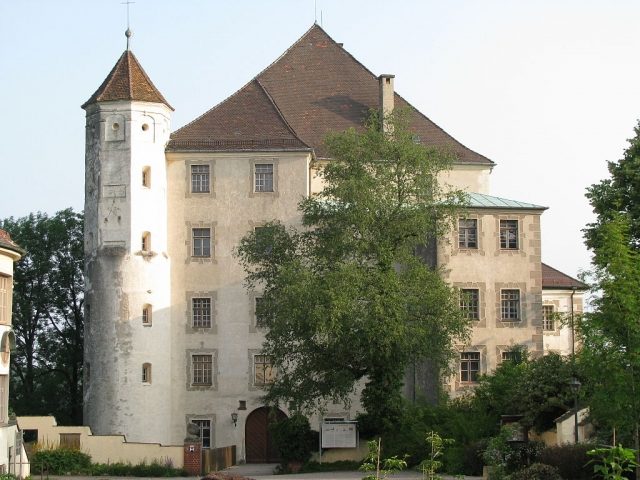
A prominent historical structure, Hohes Schloss Grönenbach, stands on a steep rock at the western edge of the village of Bad Grönenbach in the Bavarian Unterallgäu. It is the landmark of the Kneipp spa town and its construction integrates the natural Nagelfluh rock into its architecture.
History+
The origins of the castle likely date back to around 1280, when Heinrich Ludwig von Rothenstein built the oldest part on the foundations of an earlier refuge castle, which served as the seat for the Lords of Grönenbach until 1260. In 1482, the property passed to the Pappenheim family. During the Peasants' War in 1525, the castle was besieged and damaged. Through inheritance, it came into the possession of the Fugger von Kirchberg-Weißenhorn in 1612/1613, who added a northeastern extension in 1690. By 1695, the castle reverted to the Princely Abbey of Kempten, which had previously held it as a fief. In the War of the Spanish Succession, Hohes Schloss was stormed by Bavarian and French troops in 1703. From 1803, it housed a Royal Bavarian district court, with its interior furnishings already sold off by then.
Source: Wikipedia · Licence: CC BY-SA 4.0
This description draws on the facts documented in the linked Wikipedia article; Wikipedia content is licensed under CC BY-SA 4.0. Wording and editing: Mobile History.
Location: 47.8767, 10.2170