Cultural Events
Museum
CastleHessen
Hessen Castle
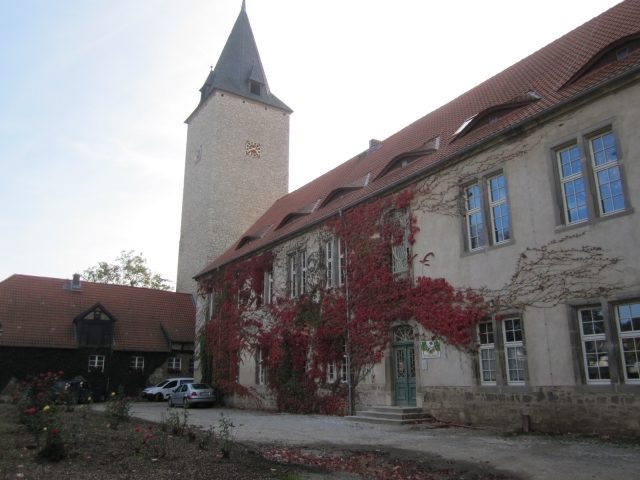
Hessen Castle was the summer residence of the Dukes of Brunswick. Before 1560, Duke Julius, while still a prince, had the castle expanded. In 1564, the later Duke Heinrich Julius, who was considered the most learned prince of his time, was born here. Early on, he began to intensively collect books. And he was versatile too: he not only introduced Protestantism but also brought the first potato from a trip to England. Cultural life on the edge of the Fallstein experienced an enormous blossoming. In fact, the civilized world looked at little Hessen early on - and with surprised eyes. The plant collection in Hessen's extensive Renaissance gardens, with 1700 species, overshadowed even royal estates like Copenhagen and Oxford. The bronze figural decorations were timelessly beautiful and can still be admired today: parts are in the Herzog Anton Ulrich Museum (Braunschweig), the Rijksmuseum (Amsterdam), and the Louvre (Paris). Finally, the organ, which Esaias Compenius built specifically for the castle chapel, is still played today at Frederiksborg Castle in Denmark. Later, the castle served as a widow's residence and was increasingly neglected after a fire in 1641.
In 1951, the authorities of the GDR began demolishing the castle. The reason, according to Hessen residents: there was allegedly a lack of packing material for paths and roads.
The lower castle was used for various purposes, sometimes as a page's house, then as a stable, and again as a tenant's dwelling. After the border opening, the Hausmannsturm was renovated, which today houses a kindergarten. The upper castle visibly decayed. The west wing had already been demolished in 1946, and the north wing collapsed in the 1970s. What remained were the east wing, which contained a chapel, and the south wing. Rain poured into the castle ruins through the collapsed roofs. Since 1995, the Schloss Hessen Support Association has been working for its preservation.
Source: Wikipedia · Licence: CC BY-SA 4.0
This description draws on the facts documented in the linked Wikipedia article; Wikipedia content is licensed under CC BY-SA 4.0. Wording and editing: Mobile History.
Location: 52.0188, 10.7808