Local government
CastleIsmaning
Ismaning Castle
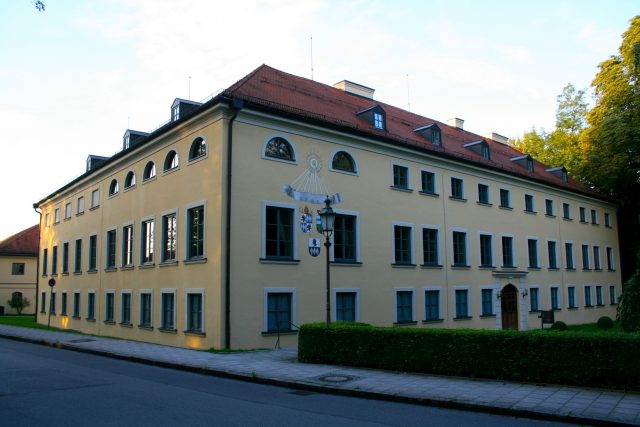
Ismaning Castle, a baroque edifice, now serves as the town hall of the municipality of Ismaning. Its history ranges from the Renaissance to the Baroque and Classicism.
History+
The castle's origins date back to 1530, when Bishop Philipp of Freising acquired an existing country estate from the Haushaimer family and had a Renaissance castle with four towers built in its place. Between 1716 and 1724, under Prince-Bishop Johann Franz Eckher, the castle underwent a baroque transformation, significantly influenced by Johann Baptist Zimmermann and master builder Dominik Gläsl. The secularization in 1802 ended the rule of the Freising prince-bishops, and Ismaning became part of the Electorate of Bavaria, with the castle and its furnishings partially damaged. In 1816, Eugène de Beauharnais, Napoleon's stepson, and his wife Auguste Amalia, daughter of King Maximilian I of Bavaria, took over the property.
Source: Wikipedia · Licence: CC BY-SA 4.0
This description draws on the facts documented in the linked Wikipedia article; Wikipedia content is licensed under CC BY-SA 4.0. Wording and editing: Mobile History.
Location: 48.2283, 11.6742