Restaurant
Marloffstein Castle
Schloss Marloffstein: A Journey Through Time+
Early History and Foundation+
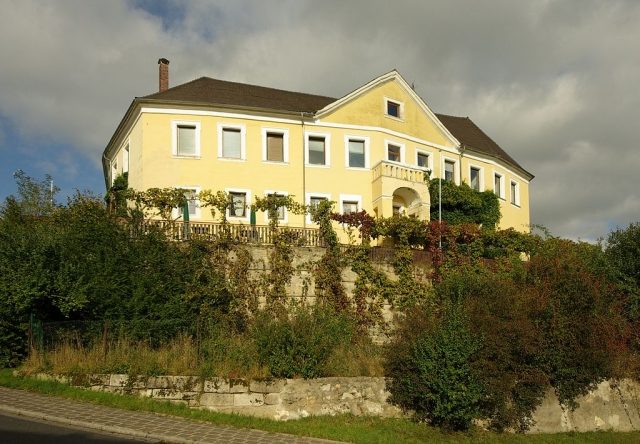
Schloss Marloffstein (Mawrolfstein) was built in the middle of the 11th century. In 1361, the castle became the seat of the episcopal office of Bamberg. In 1552, the castle was destroyed in the Second Margrave War. Reconstruction took place in 1570. From 1691-95, the castle was rebuilt in the Baroque style.
Architectural Development and Transformations+
From Medieval Fortress to Baroque Residence
The original construction in the 11th century likely featured typical Romanesque elements, serving primarily defensive purposes. The destruction in 1552 during the Margrave War marked a significant turning point, leading to a comprehensive reconstruction. This phase likely incorporated Renaissance influences, reflecting the architectural trends of the late 16th century.
The most significant transformation occurred between 1691 and 1695, when the castle was extensively remodeled in the Baroque style. This period saw the addition of ornate facades, grand interiors, and possibly landscaped gardens, transforming the former fortress into a more comfortable and representative residence befitting the episcopal office.
The Role of Schloss Marloffstein in the Prince-Bishopric of Bamberg+
As the seat of the episcopal office of Bamberg from 1361, Schloss Marloffstein played a crucial administrative and representative role. It served as a local administrative center, a residence for episcopal officials, and a symbol of the Prince-Bishopric's authority in the region. Its strategic location likely contributed to its importance in managing the surrounding territories and collecting revenues.
Later History and Present Day+
While the article focuses on the early and transformative periods, the castle continued to evolve through subsequent centuries. Further research would reveal its fate after the secularization of the Prince-Bishopric of Bamberg in the early 19th century and its current use. Today, Schloss Marloffstein stands as a testament to centuries of architectural and historical development, reflecting the rich heritage of the region.
Take Mobile History with you
You are reading this text for free. Premium adds what matters on the road: descriptions read aloud, sites found through your camera, whole regions taken offline.
- Every description, including the ~17,700 Premium sites
- Audio guide: have descriptions read to you on location
- AR finder: see sites through your camera, with distance and bearing
- Unlimited saved sites
14 days free, then from €2.99 a month. Cancel anytime.
Source: Wikipedia · Licence: CC BY-SA 4.0
This description draws on the facts documented in the linked Wikipedia article; Wikipedia content is licensed under CC BY-SA 4.0. Wording and editing: Mobile History.
Location: 49.6165, 11.0640