To be privately owned
CastleHolte
Næsse Castle
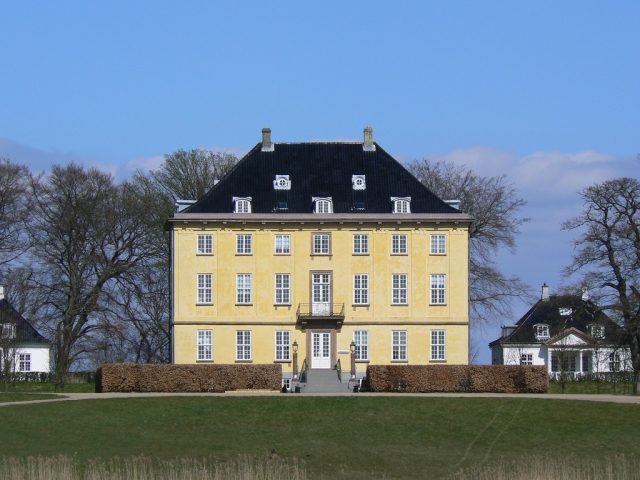
Næsse Castle, also known as Næsseslottet, is an 18th-century country house on the shores of Lake Furesøen in Holte, Denmark. Its name, meaning "Peninsula House," comes from its location on a narrow strip of land extending into the lake.
History+
The estate's origins date back to 1661 when a royal farm called Dronningegård was established here to manage the Crown's landholdings. This farm belonged to Queen Sophie Amalie until 1714, hence the name "Queen's Farm." After her death, the estate changed hands multiple times and fell into disrepair. In 1781, the shipping magnate Frédéric de Coninck acquired the ruined estate. He commissioned court architect Andreas Kirkerup to build a new main house, while the old building was converted into a farm. De Coninck had it captured in paintings by Erik Pauelsen. In 1802, he had another house, Frederikslund, built for his son. After de Coninck's death in 1811 and the bankruptcy of his company in 1821, Dronningegård had to be sold. Later owners preferred Frederikslund, and Næsseslottet again fell into neglect. In the late 19th century, it was briefly used as a bathing hotel and later by the Municipality of Copenhagen as a medical facility and by the Danish Red Cross as a refugee center. Since 1986, it has been back in private ownership.
Source: Wikipedia · Licence: CC BY-SA 4.0 · Image: http://en.wikipedia.org/wiki/File:N%C3%A6sseslottet_-_Denmark.jpg
This description draws on the facts documented in the linked Wikipedia article; Wikipedia content is licensed under CC BY-SA 4.0. Wording and editing: Mobile History.
Location: 55.8074, 12.4329