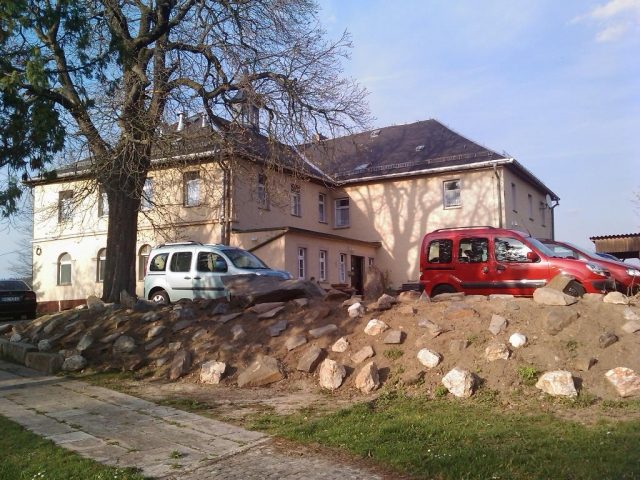
Youth hostel
Niedenburg Castle (Neidenberga)

The Historic Building: A Journey Through Time+
From Medieval Fortress to Modern Landmark+
The history of the building, often referred to as "Schloss Wartenstein," dates back to the 12th century. Originally conceived as a defensive fortress, its strategic location on a hill offered an excellent vantage point over the surrounding valley. Over the centuries, the building underwent numerous transformations, reflecting the changing architectural styles and the varying needs of its inhabitants.
The Early Years: A Fortress of Power
In its initial phase, Schloss Wartenstein was a formidable stronghold, characterized by thick walls, a towering keep, and a deep moat. It served as the seat of local nobility, who controlled trade routes and exercised their influence over the region. Life within the fortress walls was austere, dictated by military discipline and the constant threat of conflict.
Renaissance and Baroque: Periods of Transformation
With the advent of the Renaissance, the building began to shed its purely military character. New wings were added, featuring larger windows and more decorative elements. The Baroque era brought further embellishments, transforming parts of the fortress into a more comfortable residence. Elaborate frescoes, stucco work, and landscaped gardens became hallmarks of this period, reflecting a shift towards luxury and artistic expression.
Decline and Revival: From Ruin to Cultural Heritage
The 18th and 19th centuries saw a period of decline for Schloss Wartenstein. Wars, neglect, and changing social structures led to its gradual deterioration. Parts of the building fell into ruin, and its former glory seemed destined to be forgotten. However, in the early 20th century, a renewed interest in historical preservation led to extensive restoration efforts. The building was recognized as a significant cultural heritage site, and plans were made to give it a new purpose.
Architectural Features and Highlights+
Schloss Wartenstein boasts a fascinating blend of architectural styles, each telling a story of its past. From the sturdy Romanesque foundations to the elegant Baroque additions, the building is a living museum of architectural evolution.
The Keep: A Glimpse into the Past
The original keep, though modified over time, remains a central feature of the complex. Its massive stone walls and narrow windows offer a stark reminder of the building's defensive origins. Visitors can ascend to the top for panoramic views of the surrounding landscape, imagining the watchmen who once guarded the valley.
The Great Hall: A Space for Grand Occasions
The Great Hall, located in the Renaissance wing, is a testament to the building's later transformation into a noble residence. With its high ceilings, large windows, and intricate wooden paneling, it was once the setting for banquets, balls, and important gatherings. Today, it serves as a versatile space for events and exhibitions.
The Chapel: A Place of Reflection
The castle chapel, a small but beautifully preserved space, offers a glimpse into the spiritual life of its former inhabitants. Adorned with delicate frescoes and a historic altar, it provides a tranquil atmosphere for contemplation and quiet reflection.
The Building Today: A Hub for Youth and Culture+
Today, the castle houses a youth hostel.
Take Mobile History with you
You are reading this text for free. Premium adds what matters on the road: descriptions read aloud, sites found through your camera, whole regions taken offline.
- Every description, including the ~17,700 Premium sites
- Audio guide: have descriptions read to you on location
- AR finder: see sites through your camera, with distance and bearing
- Unlimited saved sites
14 days free, then from €2.99 a month. Cancel anytime.
Source: Wikipedia · Licence: CC BY-SA 4.0
This description draws on the facts documented in the linked Wikipedia article; Wikipedia content is licensed under CC BY-SA 4.0. Wording and editing: Mobile History.
Location: 50.6102, 11.5255