CastlePietzpuhl

Pietzpuhl Castle

Pietzpuhl Castle

Cultural Events

Restaurant

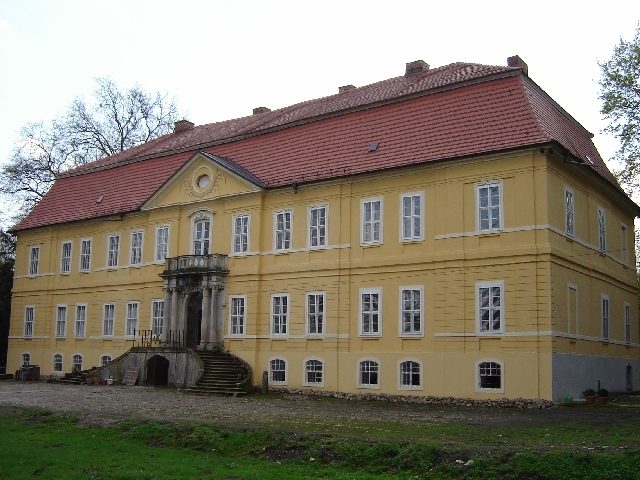
At the beginning of the 18th century, a castle already existed, which in 1730 had to make way for a new Baroque building, erected by Werner von Wulffen, also a canon of Halberstadt. Previously, the von Wulffen family had acquired Pietzpuhl to establish a manor there. Subsequent generations extensively expanded the castle and its grounds, which also include two spacious cavalier houses.

It is therefore no coincidence that in 1803 Queen Luise of Prussia was a guest at Pietzpuhl Castle. She and other guests were accommodated there due to a troop review that Frederick the Great had held annually between May 25th and 28th on the grounds between Pietzpuhl and Körbelitz since the end of the Silesian Wars in 1748. When the review, a kind of military parade and maneuver, took place for the last time in 1805, the French Marshal Bernadotte was also among the guests at Pietzpuhl Castle. The regular contacts of the von Wulffen family with the Prussian royal house led to a close connection, culminating in the Prussian king and the princes and princesses often becoming godparents to the von Wulffen children.

Between 1808 and 1828, Carl von Wulffen laid out an English-style castle park extending south into the forest. Carl von Wulffen became known as one of the founders of modern agriculture. He taught at the Prussian Agricultural Academy in Möglin and implemented his developed theories on soil improvement on the low-yield soils of his estate.

From about 1840, an alcohol distillery was housed in the western cavalier house. With the land reform in 1945, the von Wulffen family was dispossessed, and the castle was transferred to the legal ownership of the municipality of Pietzpuhl. The municipality initially housed refugee families and used the cellar and basement itself. After the last residents left the castle in 1965, it stood empty.

In 1997, the von Wulffen family succeeded in regaining their former property of the castle and park. In 2001, the municipality acquired one of the cavalier houses belonging to the castle grounds, faithfully rebuilt the dilapidated building, and established a restaurant, seminar rooms, wedding rooms, painting school, and exhibition spaces there. The castle and castle park were placed under monument protection.

Take Mobile History with you

You are reading this text for free. Premium adds what matters on the road: descriptions read aloud, sites found through your camera, whole regions taken offline.

  • Every description, including the ~17,700 Premium sites
  • Audio guide: have descriptions read to you on location
  • AR finder: see sites through your camera, with distance and bearing
  • Unlimited saved sites

14 days free, then from €2.99 a month. Cancel anytime.

Source: Wikipedia · Licence: CC BY-SA 4.0

This description draws on the facts documented in the linked Wikipedia article; Wikipedia content is licensed under CC BY-SA 4.0. Wording and editing: Mobile History.

Location: 52.2084, 11.8480