Museum
CastleRosenburg
Rosenburg Castle
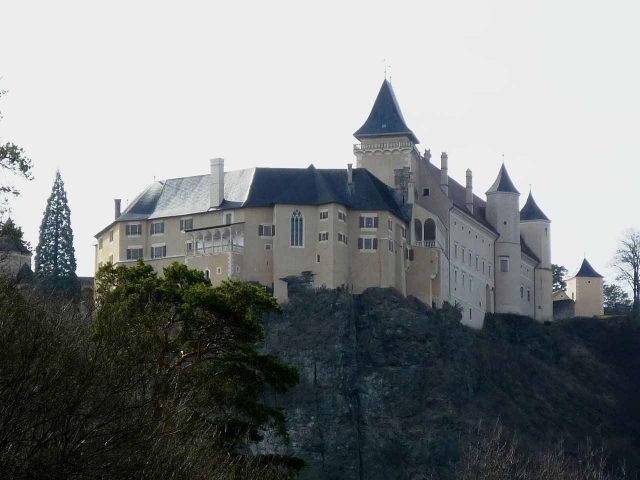
Rosenburg Castle in Lower Austria combines the history of a medieval fortress with the splendor of a Renaissance palace. Originally built in the 12th century, it was repeatedly redesigned and expanded, eventually acquiring its current form with 13 towers.
History+
The origins of Rosenburg date back to the 12th century, with its first documented mention in 1175. Of the original Romanesque castle, only the foundations of the keep remain today. In the 15th century, under Caspar von Rogendorf, it was expanded into a larger Gothic complex, of which the chapel and parts of the outer walls still remain. This Gothic castle repeatedly served as protection against the Hungarians. In the late 16th century, Sebastian Grabner, a Protestant, had large parts of the Gothic castle demolished and replaced with the current Renaissance castle featuring 13 towers. Around 1614, a large jousting arena and 46 arcades were added. Under Grabner, Rosenburg became a center of Protestantism in Austria, with its own printing press for Protestant literature. During the Counter-Reformation, the castle passed into Catholic ownership in 1611. After several changes of ownership, Rosenburg came into the possession of the Hoyos-Sprinzenstein family through marriage in 1681, who remain its owners to this day.
Source: Wikipedia · Licence: CC BY-SA 4.0 · Image: http://commons.wikimedia.org/wiki/File:Schloss_Rosenburg_%28Nieder%C3%B6sterreich%29_nach_Westen.JPG
This description draws on the facts documented in the linked Wikipedia article; Wikipedia content is licensed under CC BY-SA 4.0. Wording and editing: Mobile History.
Location: 48.6282, 15.6347