To be privately owned
CastleSassenberg
Schücking Castle
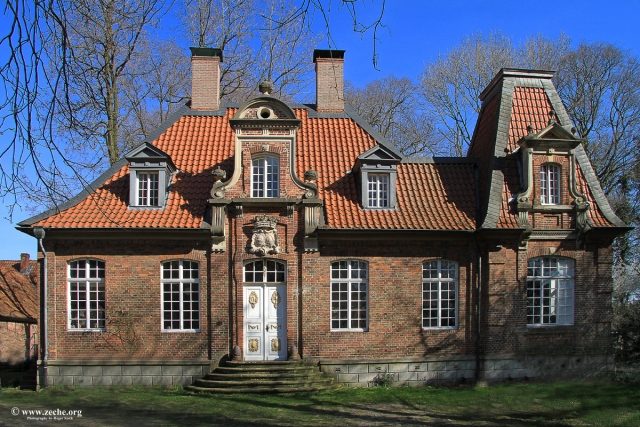
Haus Schücking was built in 1754 as the country seat of the prince-bishop's chancellor Christoph Bernhard Engelbert Schücking. The most prominent resident of the house was probably Levin Schücking. Together with Ferdinand Freiligrath and Annette von Droste-Hülshoff, he is one of the most important Westphalian poets of the 19th century. In collaboration with Freiligrath, Schücking became particularly known for the work "Das malerische und romantische Westfalen" (Picturesque and Romantic Westphalia), published in 1841. The publication marks the beginning of romantic and popular regional literature about Westphalia. In her time, Levin's mother Catharina Busch was also a well-known and popular poet. She maintained a close friendship with Annette von Droste-Hülshoff. This friendly connection was continued by her son after Catharina's death in 1831. In contrast to Droste, who deeply loved Haus Rüschhaus with its gardens amidst the Münsterland park landscape, Levin Schücking did not feel particularly comfortable in the secluded country town of Sassenberg. In 1852, he bought the baroque estate from his relatives, but preferred to stay in Münster and used the domicile in Sassenberg primarily as a summer and holiday residence. To enhance the property to be representative according to his ideas, he had Haus Schücking converted into a romantic country manor.
Building and Furnishings
The simple, single-story brick building was constructed in 1754 as the country seat of the prince-bishop's chancellor Christoph Bernhard Engelbert Schücking by th …
Source: Wikipedia · Licence: CC BY-SA 4.0 · Image: http://www.zeche.org/
This description draws on the facts documented in the linked Wikipedia article; Wikipedia content is licensed under CC BY-SA 4.0. Wording and editing: Mobile History.
Location: 51.9881, 8.0420