To be privately owned
Cultural Events
CastleWeißenberg
Weißenberg Castle
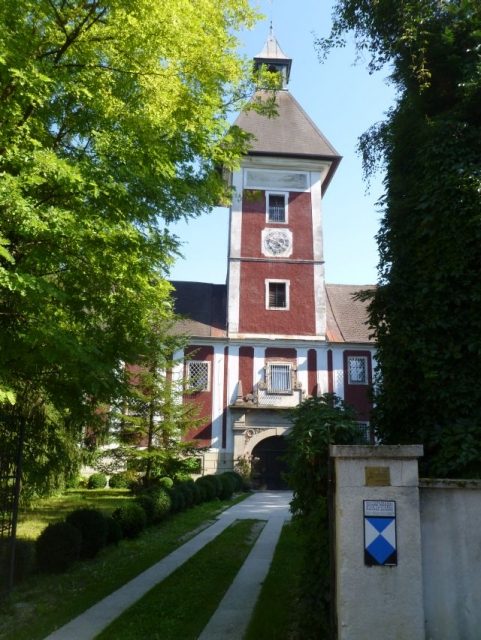
Weißenberg Castle, a historic complex in Upper Austria, is a remarkable example of the evolution from a medieval fortress to a representative Renaissance palace. Nestled in the landscape of the market town of Neuhofen an der Krems, it now serves as a private residence and a venue for cultural events.
History+
The origins of Weißenberg Castle stretch far back, with a Roman castellum or watchtower presumed to have stood on this site as early as the 1st century AD. The first documented mention of the original Weißenberg Castle occurred before 1195, when Hezel and Werhard von Wizenprech participated in a court day. Warmund von Weißenberg, the last of his family, renovated the already dilapidated castle in 1261. After the Weißenbergs, the Polheimers took over the fief, before Georg von Volkensdorff acquired the castle around 1362. During his time, the castle was besieged and conquered during a feud, but remained in the possession of the Volkensdorffers. Between 1517 and 1575, the conversion of the castle into a palace began under Volker von Volkensdorff. Hans Caspar von Volkenstorff subsequently had the current Renaissance palace built in front of the old castle, with both remaining connected by a bridge. In 1594, the extensive complex served as a refuge for the civilian population. After the last Volkensdorffer, the property passed to Count Werner von Tilly in 1629, who sold it in 1724 to Karl Sebastian Vorig von Hochhaus.
Source: Wikipedia · Licence: CC BY-SA 4.0 · Image: http://commons.wikimedia.org/wiki/File:Schloss_Wei%C3%9Fenberg_Eingang.jpg
This description draws on the facts documented in the linked Wikipedia article; Wikipedia content is licensed under CC BY-SA 4.0. Wording and editing: Mobile History.
Location: 48.1678, 14.2350