The Castle can be visited
Cultural Events
CastlePommersfelden
Weißenstein Castle
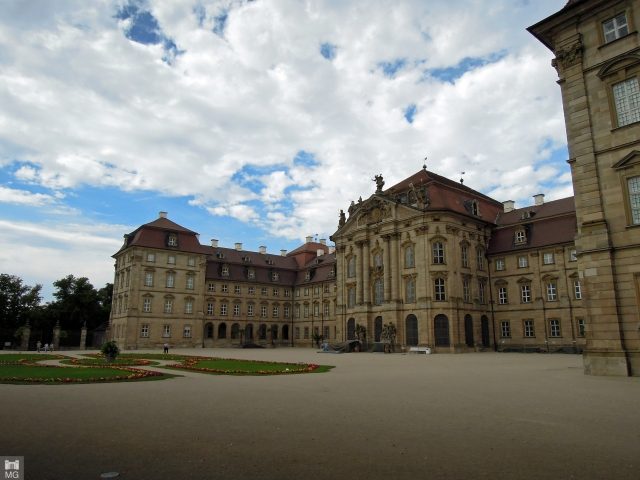
Weißenstein Castle in Pommersfelden, Bavaria, is an example of Franconian Baroque architecture. As the former summer residence of the Prince-Bishop of Bamberg and Elector of Mainz, Lothar Franz von Schönborn, it has architecture and an art collection.
History+
The construction of Weißenstein Castle took place between 1711 and 1718 under Lothar Franz von Schönborn. He had inherited the land and decided to build a new residence on a hill above the Ebrach valley, as the existing moated castle did not meet his requirements and a feudal border ran through the old building. Johann Dientzenhofer was the primary architect, with Johann Lucas von Hildebrandt also involved in the planning. The construction was supervised by the Jesuit father Nikolaus Loyson, while Maximilian von Welsch designed the stable. Lothar Franz von Schönborn, a nephew of Johann Philipp, used funds from the imperial treasury to realize this retreat.
Source: Wikipedia · Licence: CC BY-SA 4.0 · Image: Mobile Geschichte
This description draws on the facts documented in the linked Wikipedia article; Wikipedia content is licensed under CC BY-SA 4.0. Wording and editing: Mobile History.
Location: 49.7628, 10.8209