CastleWeng

Weng Castle

Weng Castle

To be privately owned

The Historic Building: A Journey Through Time+
From Medieval Origins to Baroque Splendor+

The Foundation and Early History

The origins of the historic building, known today as "Schloss Wartenstein," date back to the 12th century. Initially, it served as a fortified castle, strategically positioned on a hill overlooking the valley. Its primary purpose was to protect trade routes and assert regional power. Over the centuries, the castle underwent numerous transformations, reflecting the changing architectural styles and defensive needs of its respective eras.

The Baroque Reconstruction

The most significant transformation occurred in the early 18th century. The castle, having suffered considerable damage during the Thirty Years' War, was extensively rebuilt and expanded between 1700 and 1720 under the patronage of Prince-Bishop Lothar Franz von Schönborn. The medieval fortress was transformed into a magnificent Baroque residence, designed to impress and entertain. The renowned architect Johann Dientzenhofer was instrumental in shaping its new appearance.

Architectural Features and Art Historical Significance+

The Baroque Palace

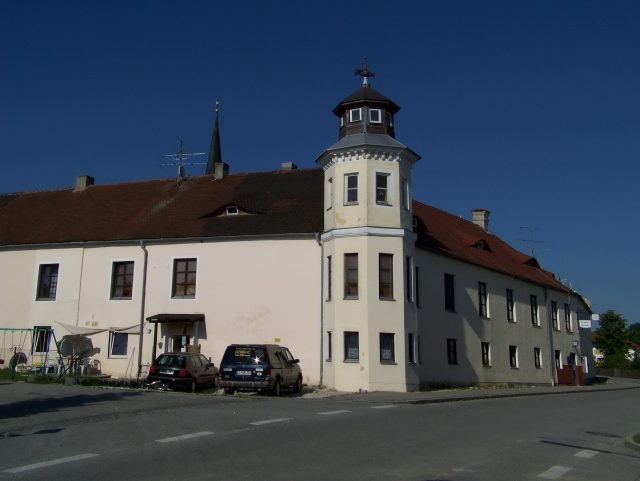
The castle was built as a baroque irregular four-wing complex in 1720.

The central element of the Baroque complex is the main palace building, characterized by its imposing facade and richly decorated interiors. The palace features a grand staircase, a magnificent ballroom, and numerous state rooms, all adorned with intricate stucco work, frescoes, and valuable tapestries. The architectural design reflects the typical characteristics of South German Baroque, combining French and Italian influences with local traditions.

The Castle Chapel

An outstanding feature is the castle chapel, dedicated to St. Michael. It is considered a masterpiece of Baroque sacred architecture. The chapel's interior is lavishly decorated with ceiling frescoes by Cosmas Damian Asam and an altar painting by Egid Quirin Asam, two of the most important artists of the German Baroque. The interplay of light, color, and form creates a deeply spiritual and awe-inspiring atmosphere.

The Gardens

Surrounding the palace are extensive Baroque gardens, laid out in the French style. They feature geometrically arranged parterres, elaborate fountains, sculptures, and tree-lined avenues. The gardens were designed not only for aesthetic pleasure but also for representation and as a setting for courtly festivities. They offer breathtaking views of the surrounding landscape and form a harmonious ensemble with the architecture of the palace.

Later History and Current Use+

From Residence to Museum

After the secularization in the early 19th century, Schloss Wartenstein lost its function as a princely residence. It subsequently served various purposes, including a military hospital and a state archive. In the mid-20th century, the decision was made to transform the castle into a museum, making its rich history and artistic treasures accessible to the public. Extensive restoration work was carried out to preserve the building's original splendor.

Today's Significance

Today, Schloss Wartenstein is one of the most important cultural monuments in the region. It houses a diverse collection of art and historical artifacts, ranging from medieval sculptures to Baroque paintings and furniture. The museum regularly hosts special exhibitions, concerts, and cultural events, attracting visitors from all over the world. The castle and its gardens serve as a vibrant center for art, history, and education, continuing to tell their fascinating story to new generations.

Take Mobile History with you

You are reading this text for free. Premium adds what matters on the road: descriptions read aloud, sites found through your camera, whole regions taken offline.

  • Every description, including the ~17,700 Premium sites
  • Audio guide: have descriptions read to you on location
  • AR finder: see sites through your camera, with distance and bearing
  • Unlimited saved sites

14 days free, then from €2.99 a month. Cancel anytime.

Source: Wikipedia · Licence: CC BY-SA 4.0

This description draws on the facts documented in the linked Wikipedia article; Wikipedia content is licensed under CC BY-SA 4.0. Wording and editing: Mobile History.

Location: 48.6561, 12.3680