To be privately owned
Zeitlofs Castle

The Historic Building: A Journey Through Time+
From Noble Residence to Cultural Monument+
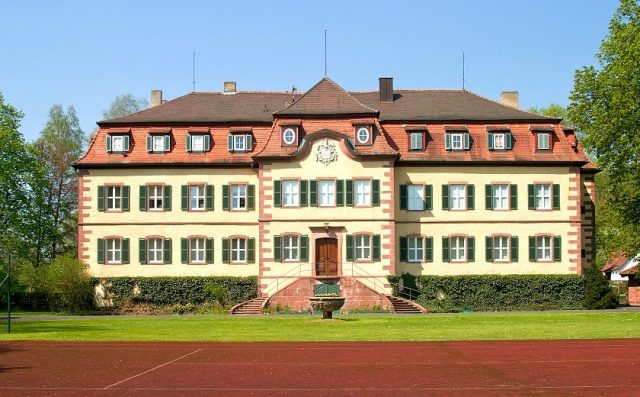
The historic building, often referred to as "Schloss Thüngen," is a magnificent example of Baroque architecture and a testament to centuries of history. Nestled in the idyllic landscape of Franconia, it has witnessed the rise and fall of noble families, periods of war and peace, and has always remained a focal point of cultural life in the region.
Architectural Masterpiece and Historical Significance
The castle was built in 1740 by Adam Siegmund von Thüngen.
The von Thüngen family, one of the oldest and most influential noble families in Franconia, played a crucial role in shaping the history of the building. Their coat of arms, still visible on some parts of the facade, bears witness to their long presence and influence.
Over the centuries, the building underwent various modifications and extensions. While the Baroque core has been preserved, elements from later periods, such as the Rococo and Classicism, can also be found. These stylistic changes reflect the changing tastes and needs of the respective owners.
The Building Today: Museum and Event Location+
Today, the historic building is much more than just a historical monument. It houses a museum that provides fascinating insights into the life of the Franconian nobility and the history of the region. Visitors can admire magnificent state rooms, historical furniture, and an extensive collection of art and cultural artifacts.
In addition to its function as a museum, the building is also a popular venue for cultural events. Concerts, exhibitions, readings, and theater performances regularly take place here, attracting visitors from near and far. The unique atmosphere of the historic walls provides an unforgettable setting for these events.
Preservation and Future
The preservation of the historic building is a major concern for the local community and numerous dedicated associations. Extensive restoration work has been carried out in recent decades to preserve the building for future generations. These measures include not only the structural preservation of the building but also the careful restoration of historical interiors and gardens.
The future of the building looks bright. It will continue to serve as a place of culture, education, and encounter. Plans include further expanding the museum offerings and making the building even more accessible to the public. The historic building remains a living testimony to a rich past and a vibrant present.
Take Mobile History with you
You are reading this text for free. Premium adds what matters on the road: descriptions read aloud, sites found through your camera, whole regions taken offline.
- Every description, including the ~17,700 Premium sites
- Audio guide: have descriptions read to you on location
- AR finder: see sites through your camera, with distance and bearing
- Unlimited saved sites
14 days free, then from €2.99 a month. Cancel anytime.
Source: Wikipedia · Licence: CC BY-SA 4.0
This description draws on the facts documented in the linked Wikipedia article; Wikipedia content is licensed under CC BY-SA 4.0. Wording and editing: Mobile History.
Location: 50.2632, 9.6716