The remains of the Castle can be visited
CastleDargun
Dargun Castle
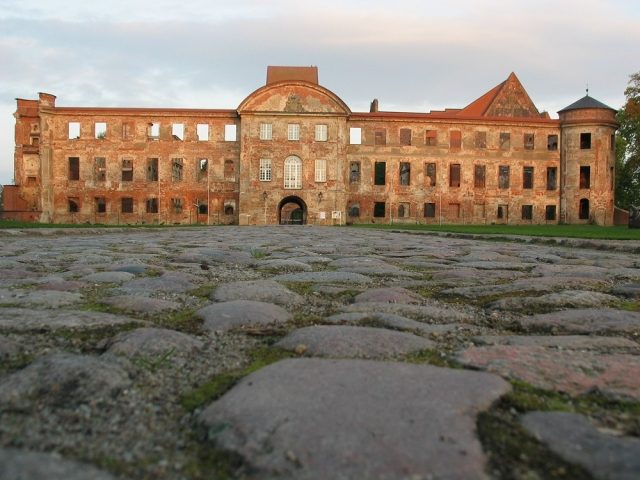
The Dargun Palace Ruin is in Mecklenburg-Vorpommern. Originally a Cistercian monastery, it was transformed into a Renaissance palace after the Reformation. Today, the complex is a secured ruin, reflecting architectural development from Brick Gothic to the Renaissance.
History+
The origins of the complex date back to 1172, when Bishop Berno of Schwerin founded the Cistercian monastery of Dargun on the site of a destroyed castle. After its destruction by Wendish uprisings and a failed attempt at resettlement in 1209, a new foundation was only successful in 1216. In the mid-16th century, during the secularization, Duke Ulrich I of Mecklenburg-Güstrow took over the complex and had it converted into a palace. After the extinction of the Güstrow ducal line, the palace passed to the Dukes of Mecklenburg-Schwerin, who expanded it in the early 17th century and rebuilt it after the devastations of the Thirty Years' War under Duke Gustav Adolf. It later served as a widow's residence and administrative building before burning down in 1945 and becoming a ruin. Extensive safeguarding and restoration measures have been underway since 1991.
Source: Wikipedia · Licence: CC BY-SA 4.0 · Image: http://commons.wikimedia.org/wiki/File:Dargun_Kloster_und_Schlossruine.jpg
This description draws on the facts documented in the linked Wikipedia article; Wikipedia content is licensed under CC BY-SA 4.0. Wording and editing: Mobile History.
Location: 53.8922, 12.8617