Parish church
MonasteryWarendorf
Church of Saint Boniface
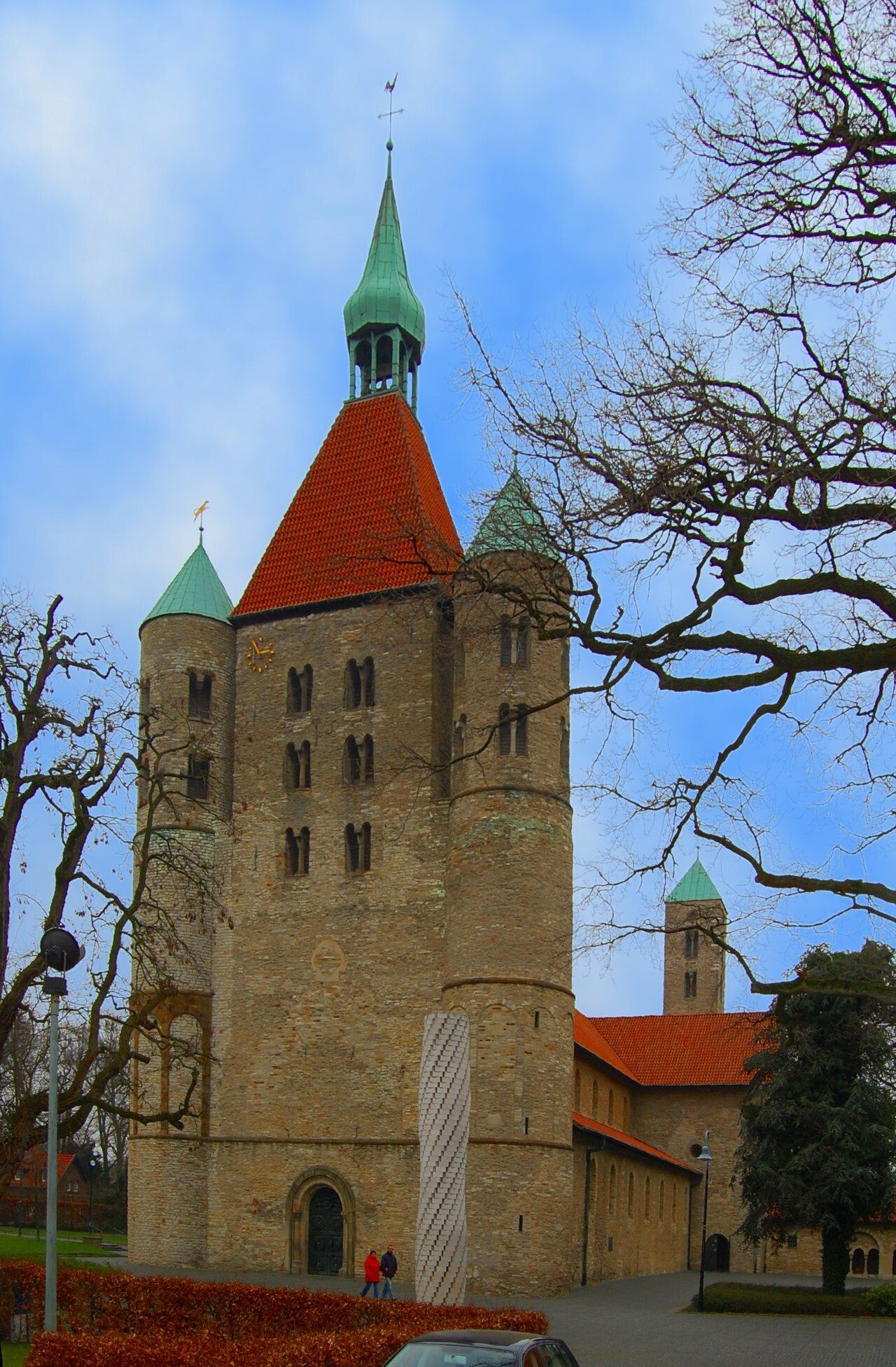
The former St. Bonifatius monastery in Warendorf, North Rhine-Westphalia, is a significant cultural monument in Germany. Originally founded as a secular convent for noblewomen, the complex is characterized by its long and eventful history, dating back to the early Middle Ages.
History+
The establishment of St. Bonifatius monastery is attributed to the Saxon nobleman Everward and his wife Geva, occurring around 854. Bishop Liutbert of Münster provided the newly founded monastery with important relics, including one of Saint Boniface. In the 9th century, monastic foundations still enjoyed the freedom to develop their own rules. However, with Rome's demand for a unified, ecclesiastically recognized rule, the monastery transformed into a collegiate church in the 13th century, before 1240. The nuns became canonesses, likely adopting parts of the Augustinian Rule. This development allowed abbesses to preside over several Westphalian collegiate churches simultaneously. Originally, abbesses had to come from noble families, but with the decline of these dynasties, a canoness from Meschede collegiate church was elected in 1298, and abbesses thereafter had to acknowledge the rights of the convent. In the 14th and 15th centuries, the veneration of the cross became very popular in Freckenhorst. A profound internal development led to its transformation into a noble secular collegiate church in 1495, with papal approval. The St. Bonifatius collegiate church was elevated to a collegiate church and also served as the parish church for the growing settlement. Over time, religious life receded in favor of material interests and imperial freedoms, paving the way for the Reformation. Only in the early 17th century did the Catholic faith regain sole dominance in the convent.
Location+
The former St. Bonifatius monastery is located in Freckenhorst, a district of the city of Warendorf in the federal state of North Rhine-Westphalia, Germany.
On site+
Today, the former St. Bonifatius monastery is protected as a cultural monument in Germany, bearing witness to its long and significant history. The former collegiate church continues to serve as a parish church.
Nearby+
- Haus Dieck (Castle, approx. 6126 m away)
- Schloss Schücking (Castle, approx. 9026 m away)
- Schloss Vornholz (Castle, approx. 9908 m away)
- Ruine Nienburg (Ostenfelde) (Ruin, approx. 10904 m away)
Take Mobile History with you
You are reading this text for free. Premium adds what matters on the road: descriptions read aloud, sites found through your camera, whole regions taken offline.
- Every description, including the ~17,700 Premium sites
- Audio guide: have descriptions read to you on location
- AR finder: see sites through your camera, with distance and bearing
- Unlimited saved sites
14 days free, then from €2.99 a month. Cancel anytime.
Location: 51.9208, 7.9687