Town FortificationAugsburg

Augsburg Town Fortification
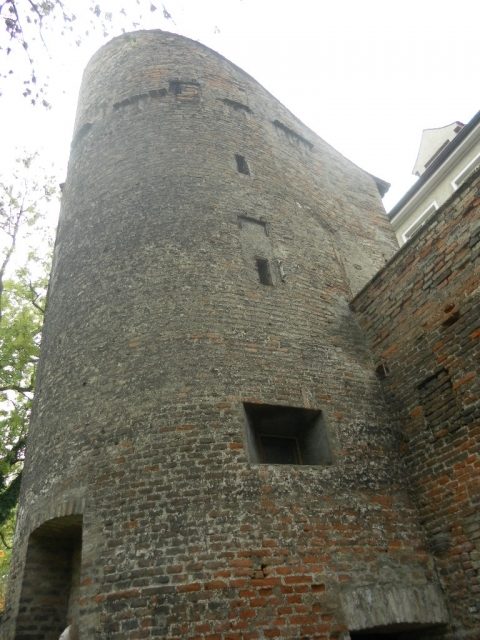
Augsburg Town Fortification

The Town Fortification can be visited

The city of Augsburg had a stone fortification since Roman times. Furthermore, there were moats and various city gates. The facilities were expanded and reinforced over the centuries. In the mid-19th century, the city of Augsburg began to dismantle its fortress status, leading to the demolition of many fortification structures. To this day, five city gates, four bastions, and long sections of the city wall have been preserved.

Already in Roman times, Augsburg was protected from enemy attacks by city walls and a city moat. In the early Middle Ages, wooden palisades then protected the bishop's city within Augsburg. In the fight against the Hungarians around the year 955, earthworks and low walls (so-called Bishop's Walls) were built; the suburbs and monasteries were still outside the city fortifications. Although the Bishop's Wall is not preserved, its course can be traced based on street layouts.

In the early 14th century, the city wall was extended to the north and south. In the mid-14th century, the Jakobervorstadt was then walled. The fortress city of Augsburg was considered difficult to capture at this time, which was also due to the advanced weapon technology of the time (large-caliber cannons). In the 16th century, the existing facilities were reinforced and the armament improved.

Between 1605 and 1626, Elias Holl modernized all Augsburg city gates. However, the focus was not on military improvements but primarily on optical embellishments. In the Thirty Years' War and the War of the Spanish Succession, the city fortifications were severely damaged. This was followed by reconstruction until 1735. The last phase of fortress construction ended in 1746.

In 1806, Augsburg became a Bavarian garrison city and the fortifications became state property. Despite their poor condition, the state did not carry out any maintenance work on the facilities. At the beginning of the 19th century, gates within the city, such as the Barfüßertor or the Heilig Kreuzer Tor, were demolished. In March 1860, the Gögginger Tor was demolished at the behest of King Max II. In 1866, the decree for Augsburg's release from its fortress status was issued by King Ludwig II. The city bought back the facilities for 200,000 guilders and began with the demolition. In 1867, the first sections of the wall fell, and the Schwibbogentor was also demolished. For some gates, such as the Jakobertor, there was resistance among the population against the demolition, so they were preserved. The Frauentor, however, was not preserved despite resistance, as the cramped passage hindered the already greatly increased traffic at that time.

Imperial City Gates+
Portals+

In addition to the large Imperial City Gates, there were also the following small side gates or portals, whose significance was lesser:

  • Bleichertörle (also Neibad- or Walktörle) near the Sieben Kindeln
  • Knäpplinsthörlein
  • Südttor (Schwalbenecktor)
Bastions+
  • Lueginsland

Take Mobile History with you

You are reading this text for free. Premium adds what matters on the road: descriptions read aloud, sites found through your camera, whole regions taken offline.

  • Every description, including the ~17,700 Premium sites
  • Audio guide: have descriptions read to you on location
  • AR finder: see sites through your camera, with distance and bearing
  • Unlimited saved sites

14 days free, then from €2.99 a month. Cancel anytime.

Source: Wikipedia · Licence: CC BY-SA 4.0

This description draws on the facts documented in the linked Wikipedia article; Wikipedia content is licensed under CC BY-SA 4.0. Wording and editing: Mobile History.

Location: 48.3724, 10.8956