Town FortificationKranenburg

Town Fortification Kranenburg
Town Fortification Kranenburg

The City Wall can be visited


The Historic Building: A Journey Through Time+
The Origins and Early Construction+

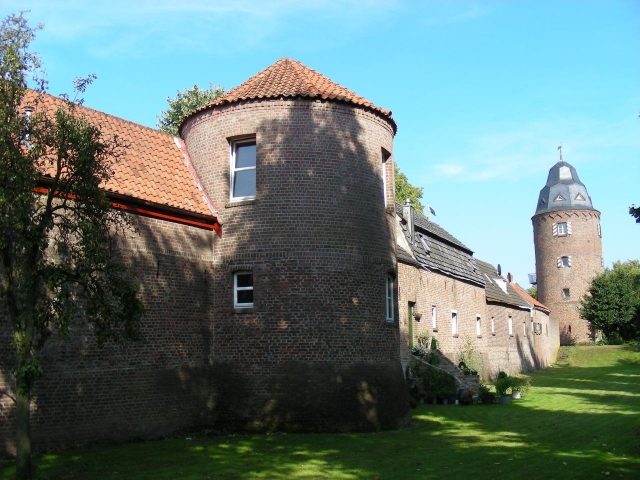
The city's fortifications were erected in 1368, consisting of a rampart and a moat. From 1395-1401, the city wall was built of brick. The two city gates (Klever Tor and Nimweger Tor) have completely disappeared; of the formerly four towers, the Mühlensturm (Mill Tower) is the best preserved.

Architectural Features and Transformations+

The Romanesque Core

The core of the building dates back to the Romanesque period, characterized by its robust stone walls and round-arched windows. These early elements are still visible in the lower sections of the main tower, showcasing the original defensive purpose of the structure.

Gothic Additions and Renovations

During the Gothic era, significant additions were made. The upper floors of the main building were extended, and larger, pointed-arch windows were installed, allowing more light into the interior. A chapel, adorned with intricate tracery, was also added during this period, reflecting the changing architectural styles and the growing importance of religious spaces.

Baroque and Later Modifications

The Baroque period brought further transformations, primarily in the interior. Elaborate stucco work, frescoes, and decorative elements were introduced, transforming some of the more austere rooms into opulent living spaces. Later modifications, though less extensive, included the addition of a new roof structure and the modernization of certain facilities to adapt to contemporary needs.

Notable Residents and Historical Events+

Over the centuries, the building has been home to numerous notable figures, including local nobility, influential merchants, and even a few artists. It has witnessed significant historical events, from sieges and political upheavals to periods of peace and prosperity. Each era has left its mark, contributing to the rich tapestry of stories embedded within its walls.

Current Use and Public Access+

Today, the historic building serves as a museum, offering visitors a unique glimpse into its storied past. Exhibitions showcase artifacts from different periods, and guided tours provide detailed insights into its architecture and history. The grounds also host various cultural events throughout the year, making it a vibrant center for historical and artistic engagement.

Take Mobile History with you

You are reading this text for free. Premium adds what matters on the road: descriptions read aloud, sites found through your camera, whole regions taken offline.

  • Every description, including the ~17,700 Premium sites
  • Audio guide: have descriptions read to you on location
  • AR finder: see sites through your camera, with distance and bearing
  • Unlimited saved sites

14 days free, then from €2.99 a month. Cancel anytime.

Location: 51.7883, 6.0065