To be privately owned
ResidenceTivoli
Villa d’Este
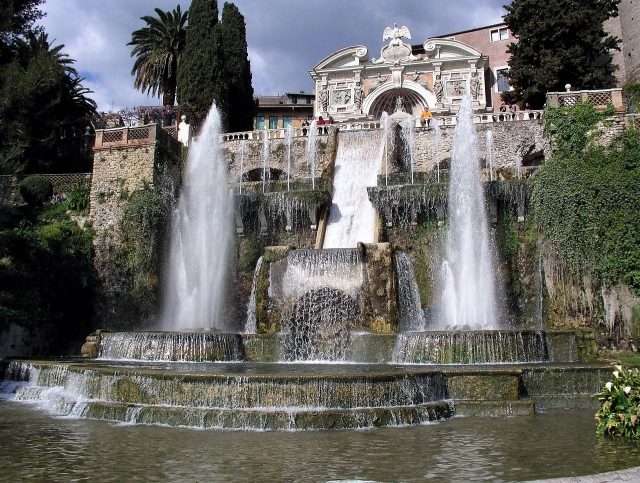
In Tivoli, Lazio, stands Villa d’Este, a residence primarily known for its gardens. It is considered a masterpiece of Italian Renaissance garden art and has significantly influenced European garden architecture.
History+
The history of Villa d’Este began in 1550 when Cardinal Ippolito II d’Este, son of Lucrezia Borgia, became governor of Tivoli and chose a former Benedictine monastery as his residence. He envisioned an expansive garden on the hillside below the palace. The implementation of these plans started in 1560 under the direction of architect Pirro Ligorio, involving a fundamental reshaping of the entire valley. The villa’s interiors were richly decorated by leading artists of Roman Mannerism. Upon the Cardinal's death in 1572, the works were largely complete. His successor, Cardinal Alessandro d’Este, commissioned further renovations and alterations to the garden design from 1605 onwards. Additional construction took place between 1660 and 1670, with Gianlorenzo Bernini also involved. In the 18th century, the estate, then owned by the House of Habsburg, fell into disrepair due to insufficient maintenance.
Source: Wikipedia · Licence: CC BY-SA 4.0 · Image: http://commons.wikimedia.org/wiki/File:Tivoli,_Villa_d%27Este,_Neptunbrunnen_und_Wasserorgel.jpg
This description draws on the facts documented in the linked Wikipedia article; Wikipedia content is licensed under CC BY-SA 4.0. Wording and editing: Mobile History.
Location: 41.9624, 12.7964