Castle
MonasteryNiederlausitz
Dobrilugk Abbey
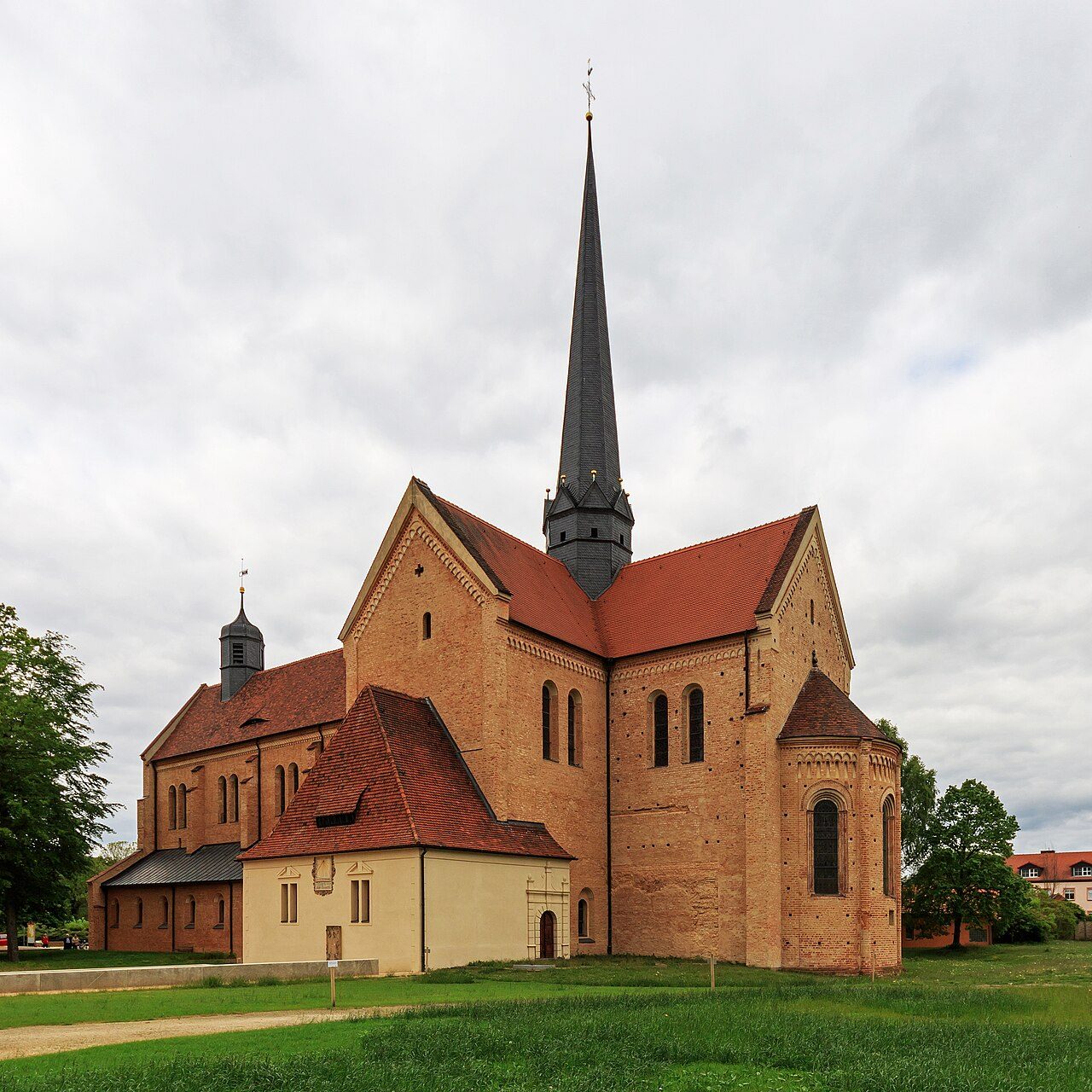
The Cistercian Abbey Dobrilugk, a historic monastery in the Elbe-Elster region of Brandenburg, Germany, was built at an elevation of approximately 96 meters above sea level. It represents a significant testament to medieval sacred architecture and settlement history.
History+
The abbey was founded on May 1, 1165, under the patronage of Saints Sigismund and Henry. Margrave Dietrich von Landsberg initiated the settlement of the Cistercian monks, supported by his Wettin relatives, Archbishop Wichmann of Magdeburg, and Bishop Werner of Płock, who brought relics of the holy Emperor Henry to Dobrilugk. Through extensive donations, the monastery rapidly expanded its possessions. By 1234, it already comprised 18 villages, and from 1240, the financially strong convent was able to expand its landholdings through purchases. A document from Emperor Charles IV in 1373 confirmed the monks' ownership of 40 villages and five monastic farms. The small town of Kirchhain also fell under the monastery's rule, which granted it market rights in 1235. The monastery also owned estates in Luckau and Lübben (Spreewald), which served the trade of agricultural products. Dobrilugk played a significant role in the regional development of western Lusatia, where settlers from Saxony, Thuringia, and the Lower Rhine drained wetlands, cleared forests, prepared arable land, and founded villages. Most of the subjects were Sorbs. The monastery's prestige was evident in 1349 with the plan to rebury the remains of Ascanius dukes from Wittenberg to Dobrilugk, though this was never carried out. Towards the end of the 14th century, a decline began as the monks abandoned self-sufficiency and lived off rents, due to a lack of lay brothers. In 1431, the monastery was plundered by the Hussites. With the Reformation in the 16th century, more and more monks left the convent, and monastic discipline disintegrated. The last abbot absconded with monastic treasures in 1533. High contributions for the Turkish War, demanded by King Ferdinand I, exacerbated the situation. In 1541, the Saxon Elector Johann Friedrich occupied Dobrilugk, after which the monks left the monastery. Although Ferdinand I recaptured the lordship in the Schmalkaldic War, no more monks were settled. Instead, the lordship was pledged to noble families. Around 1550, a hunting lodge was built in place of the abbot's house. In 1624, the last noble owner sold Dobrilugk to Johann Georg I of Saxony.
Location+
The former Cistercian Abbey is situated in the Elbe-Elster region of the federal state of Brandenburg, Germany. It is located at an elevation of approximately 96 meters above sea level.
On site+
After the cessation of monastic life in the 17th century, the present-day Doberlug Castle was built on the former monastery grounds. The original abbey complex has thus been partly integrated into or built over by the later castle architecture.
Nearby+
- Doberlug Castle (castle, approx. 117 m away)
- Theisa Manor House (manor and estate house, approx. 9216 m away)
- Stechau Castle (castle, approx. 11057 m away)
- Finsterwalde Castle (castle, approx. 11567 m away)
Take Mobile History with you
You are reading this text for free. Premium adds what matters on the road: descriptions read aloud, sites found through your camera, whole regions taken offline.
- Every description, including the ~17,700 Premium sites
- Audio guide: have descriptions read to you on location
- AR finder: see sites through your camera, with distance and bearing
- Unlimited saved sites
14 days free, then from €2.99 a month. Cancel anytime.
Source: Wikipedia · Licence: CC BY-SA 4.0 · Image: A.Savin / CC BY-SA 3.0 via Wikimedia Commons
This description draws on the facts documented in the linked Wikipedia article; Wikipedia content is licensed under CC BY-SA 4.0. Wording and editing: Mobile History.
Location: 51.6111, 13.5454