former educational and retreat house
MonasteryEltville am Rhein
Kloster Tiefenthal
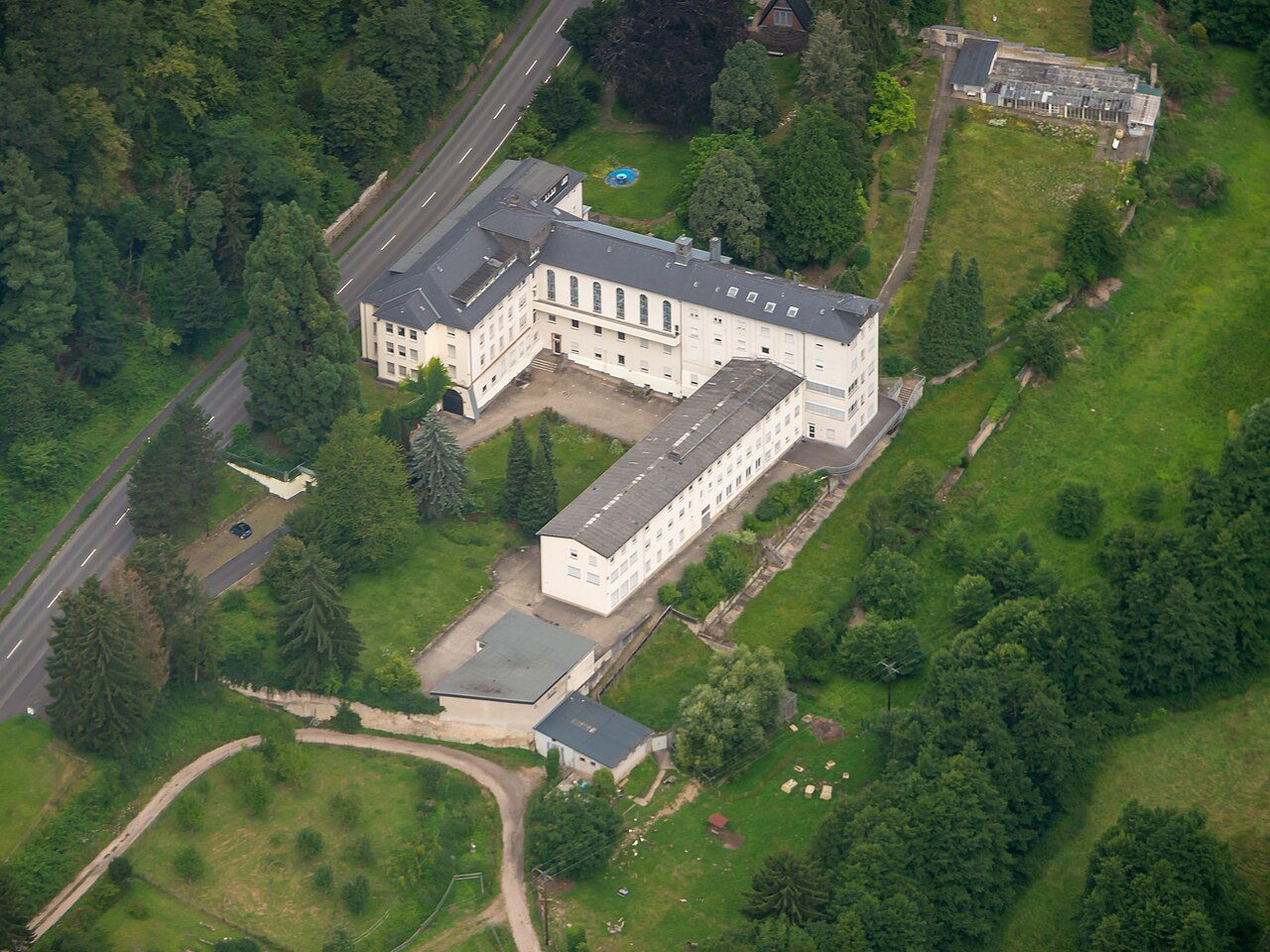
The former Cistercian convent of Tiefenthal, a historic sacred site in Hesse, Germany, is characterized by its eventful history and the preservation of a few, but significant, architectural testimonies. Originally inhabited by Premonstratensian nuns, the convent later adopted the Cistercian rule and served for centuries as a spiritual center in the region.
History+
The Tiefenthal monastery was founded in the mid-12th century. Initially, it housed Premonstratensian nuns, followed briefly by Benedictine nuns. In 1242, the convent collectively adopted the Cistercian rule and subsequently fell under the authority of the Abbot of Eberbach Abbey. A significant relic, a garment of Saint Elisabeth, was kept here before it moved to St. Martin in Oberwalluf in the early 19th century. After a fire in 1572, the monastery was rebuilt. During the secularization, the order was dispossessed on January 27, 1803. After secularization, the property served as an asylum for the poor and was later used for economic purposes by various entrepreneurs. In the late 19th century, the Irish noblewoman Anna Maria Grainger acquired the monastery and had it converted into an English country estate. Her daughter bequeathed the monastery to the Dernbacher Sisters, who used it as a branch establishment. Shortly before World War II, the monastery was confiscated, used as a school, and later as an SS espionage department. After being destroyed by bombing in 1945, it was rebuilt by the Dernbacher Sisters and served as a provincial house from 1952, later as an educational and retreat center. In 2021, the monastery was closed due to the high average age of the religious community and the significant costs of necessary investments in the building structure and fire protection.
Location+
Tiefenthal Monastery is located in Hesse, Germany, near Eltville-Martinsthal in the Rheingau region, but belongs to the Rauenthal district. It is situated directly on federal highway B260.
On site+
Today, only a few historical elements of the original monastic complex remain, including a keystone from Abbess Franziska Cronberg dated 1765, a door lintel from 1755, and an 18th-century sandstone portal. In the park, some old trees from the 19th-century landscape park can still be found.
Nearby+
- Sommerberg Castle (Wiesbaden-Frauenstein) (Castle, approx. 2096 m away)
- Frauenstein Ruin (Wiesbaden) (Ruin, approx. 2556 m away)
- Scharfenstein Ruin (Kiedrich) (Ruin, approx. 3098 m away)
- Groenesteyn Castle (Kiedrich) (Castle, approx. 3408 m away)
Take Mobile History with you
You are reading this text for free. Premium adds what matters on the road: descriptions read aloud, sites found through your camera, whole regions taken offline.
- Every description, including the ~17,700 Premium sites
- Audio guide: have descriptions read to you on location
- AR finder: see sites through your camera, with distance and bearing
- Unlimited saved sites
14 days free, then from €2.99 a month. Cancel anytime.
Location: 50.0611, 8.1194