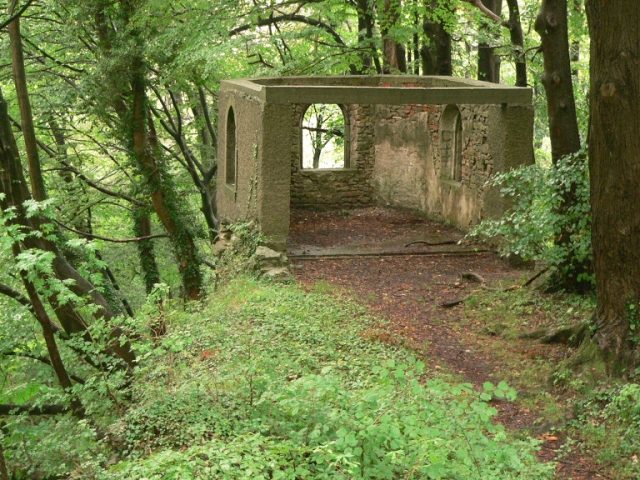
The remains of the Castle can be visited
CastleSalzhemmendorf - Lauenstein
Lauenstein Castle
History+
The noble lords of Homburg erected Lauenstein Castle in the early 13th century, after their nearby Spiegelberg Castle was destroyed in 1226. A first documentary mention dates back to 1247. In the same year, Heinrich von Homburg transferred the castle to Duke Otto the Child of the Welfs, but immediately received it back as a fief. Inhabitants from abandoned villages settled under the castle's protection and founded the village of Lauenstein. After the Homburg family died out in 1409, the castle passed to the Welf dukes of Braunschweig-Lüneburg. Financial difficulties led to its pledging in 1433 to Bishop Magnus of the Diocese of Hildesheim, who in turn sub-enfeoffed it to various noble families. In 1515, a conflict arose when Burchard von Saldern and his brothers took over the castle and the office of Lauenstein from the Hildesheim bishop, who then terminated the contract. After an arbitration award and Burchard's refusal to accept the offered money, he was expelled in 1518. In revenge, he burned down the castle and left a letter of fealty.
Source: Wikipedia · Licence: CC BY-SA 4.0 · Image: http://de.wikipedia.org/wiki/Datei:Lauenstein_Kapelle.jpg
This description draws on the facts documented in the linked Wikipedia article; Wikipedia content is licensed under CC BY-SA 4.0. Wording and editing: Mobile History.
Location: 52.0764, 9.5488