To be privately owned
CastleL’Hermenault
Château de L'Hermenault
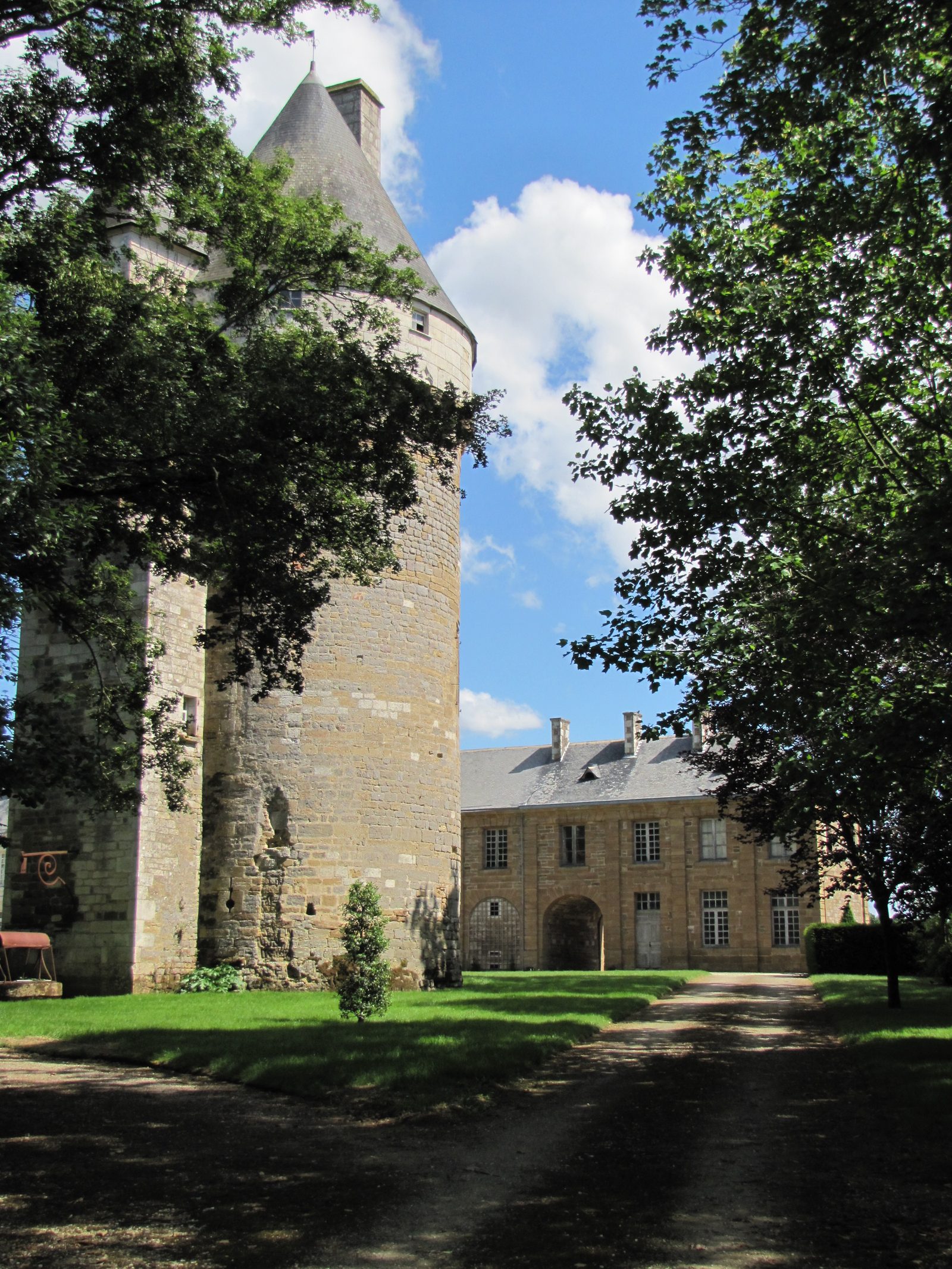
The Château de L’Hermenault is a historic site located in the commune of L’Hermenault, in the Vendée department of the Pays de la Loire region in western France. It stands on a promontory between the plain and the bocage in southern Vendée, in the canton of La Châtaigneraie.
The site began as a fortified priory around the year 1000, attached to the Abbey of Maillezais. From the 14th century it served as the summer residence of the bishops of Maillezais, and after the transfer of the episcopal see in 1648 it became the summer residence of the bishops of La Rochelle (Bishop Jacques Raoul de La Guibourgère died there).
In the Renaissance, Bishop Geoffroy d’Estissac built a château (c. 1523–1528); only the Tour d’Estissac survives. His secretary François Rabelais stayed at the residence and sent plane-tree seedlings from Rome for the grounds. The château was sacked during the Wars of Religion and restored in the 17th century by Bishop Henri de Béthune, who also laid out a formal park of Italian inspiration with the help of the Richelieu architect Barthélémy Gilles. In the 18th century Bishop François-Joseph-Emmanuel de Crussol d’Uzès added the “Logis des Dames” in the Rochelais style and continued the landscaping.
During the Revolution the estate was sold as national property to the La Rochelle shipowner Daniel Garesché; the Renaissance château was demolished for its stone. In 1806 it was purchased by Colonel Pierre Godard des Breuzes, a former royal geographic engineer who later became mayor of L’Hermenault. The property has remained in the same family ever since.
Surviving elements include the Renaissance Tour d’Estissac, ramparts, a dovecote (former medieval powder tower), 17th-century arcaded outbuildings, the 18th-century Logis des Dames, and a colossal early-17th-century barn with a remarkable Philibert de l’Orme-style roof structure. The formal French park features four grass terraces, each 110 metres long, linking the château platform to the canalised River Longèves; a large semi-circular meadow with a reflecting pool; an elaborate hydraulic system (mill, wash-house, horse-bathing pool, stone bridge and tunnel); and an avenue of plane trees traditionally associated with Rabelais.
The ensemble of buildings, park (with enclosure walls), archaeological podium and hydraulic works was inscribed as a Monument historique on 24 March 2014. The site received the French Heritage Society Prize in 2009. The park is open to the public in season (typically weekends in June and daily from mid-July to the end of August in the afternoons, as well as on Heritage Days).
Take Mobile History with you
You are reading this text for free. Premium adds what matters on the road: descriptions read aloud, sites found through your camera, whole regions taken offline.
- Every description, including the ~17,700 Premium sites
- Audio guide: have descriptions read to you on location
- AR finder: see sites through your camera, with distance and bearing
- Unlimited saved sites
14 days free, then from €2.99 a month. Cancel anytime.
Source: Wikipedia · Licence: CC BY-SA 4.0 · Image: Spouik · Wikimedia Commons · CC BY-SA 4.0
This description draws on the facts documented in the linked Wikipedia article; Wikipedia content is licensed under CC BY-SA 4.0. Wording and editing: Mobile History.
Location: 46.5188, -0.8982