The remains of the castle can be visited
CastleBlaye
Château des Rudel
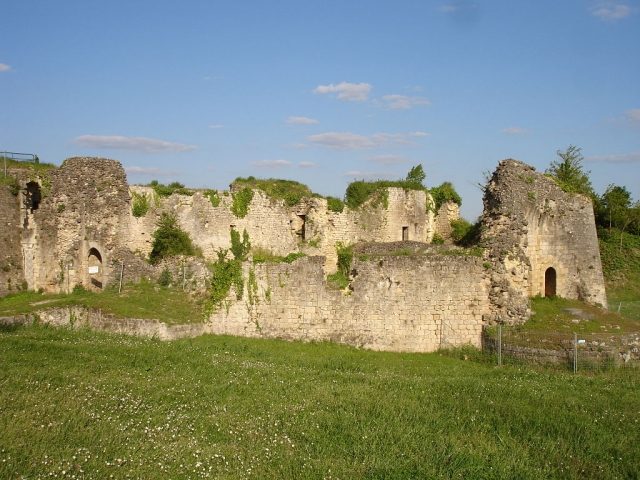
The Château des Rudel is a château in Blaye, Gironde, Nouvelle-Aquitaine, France. It was built to protect the fortified town of Blaye from possible enemy incursions and is built on a rocky spur overlooking the Gironde estuary. It was constructed in the 12th century, the chateau was then besieged by Protestants during the French Wars of Religion in the 16th century and it now lies in ruins.
History+
As early as the 4th century, a castrum is mentioned by the poet Ausonius (c.310 – c.395). A few centuries later, the King of Aquitaine, Charibert II, had a first fortress built on the site, which was then captured in 994 by the Counts of Angoulême and the Rudel family. Jaufré Rudel, as described in his biography as the "Prince of Blaye," remains one of the emblematic figures of this castle. Born around 1113, this famous troubadour distinguished himself by writing poems celebrating courtly love. One of his best-known works is "L'amor de luenh" a poem written in Occitan is dedicated to an Eastern princess. Jaufré Rudel went on crusade and (probably) died around 1148 near Jerusalem. In the second half of the 12th century, the lordship of Blaye fell to Geoffroy II and then to his son Geoffroy III who died in 1245. The castle was then entrusted to Anglo-Gascon lords who administered the place until Aquitaine became definitively French. The castle was then besieged during the Wars of Religion by Calvinist armies. It was also reinforced during the reign of King Louis XIII (1610–1643) before being incorporated into the citadel commissioned by his successor. In 1685, Louis XIV (1638–1715) ordered Sébastien Le Prestre, Marquis of Vauban to oversee the construction of a vast 38-hectare citadel intended to be "the lock of Bordeaux". While part of the medieval town was destroyed to build the new fortress, the castle was preserved to serve as the residence of the military governors of the city. As the English prepared to lay siege to the city in 1814, the military authorities decided to demolish two-thirds of the walls of the old castle. Once peace returned, the castle was no longer maintained and it fell into ruin over the next several decades.
Source: Wikipedia · Licence: CC BY-SA 4.0 · Image: http://commons.wikimedia.org/wiki/File:France_-_Blaye_-_ruines_de_la_citadelle2.jpg?uselang=fr
This description is an excerpt from the linked Wikipedia article and was written by its authors. Like the original it is licensed under CC BY-SA 4.0 and may be reused under the same terms.
Location: 45.1301, -0.6659